What the volcano told us is a week-long holiday collaboration, where I supplied a daily photograph and Laura wrote around 300 words about it.
Day One
This time we chose to go south. We had forgotten that the south is where madness lives. Things ‘go south’. But what some call madness for others is an opening of the eyes, a broadening of horizons, an evolution of sorts.
It does not feel like that at the beginning, however, as this evolution is full of subterfuge; the locals jumping queues with a cunning and bravado we do not possess. We are not receptive to it. We call it out. So far, we are winning. But are we winning?
When we arrived, tired and disoriented, we sought our habitual north, in tastes, actions, schedules, but we were thrown in at the deep end. No north was available, or if it was, it was only in appearance, to lure us in. When we look closely, we discover Macclesfield was Lombardy. The tears kept appearing in the fabric of reality.
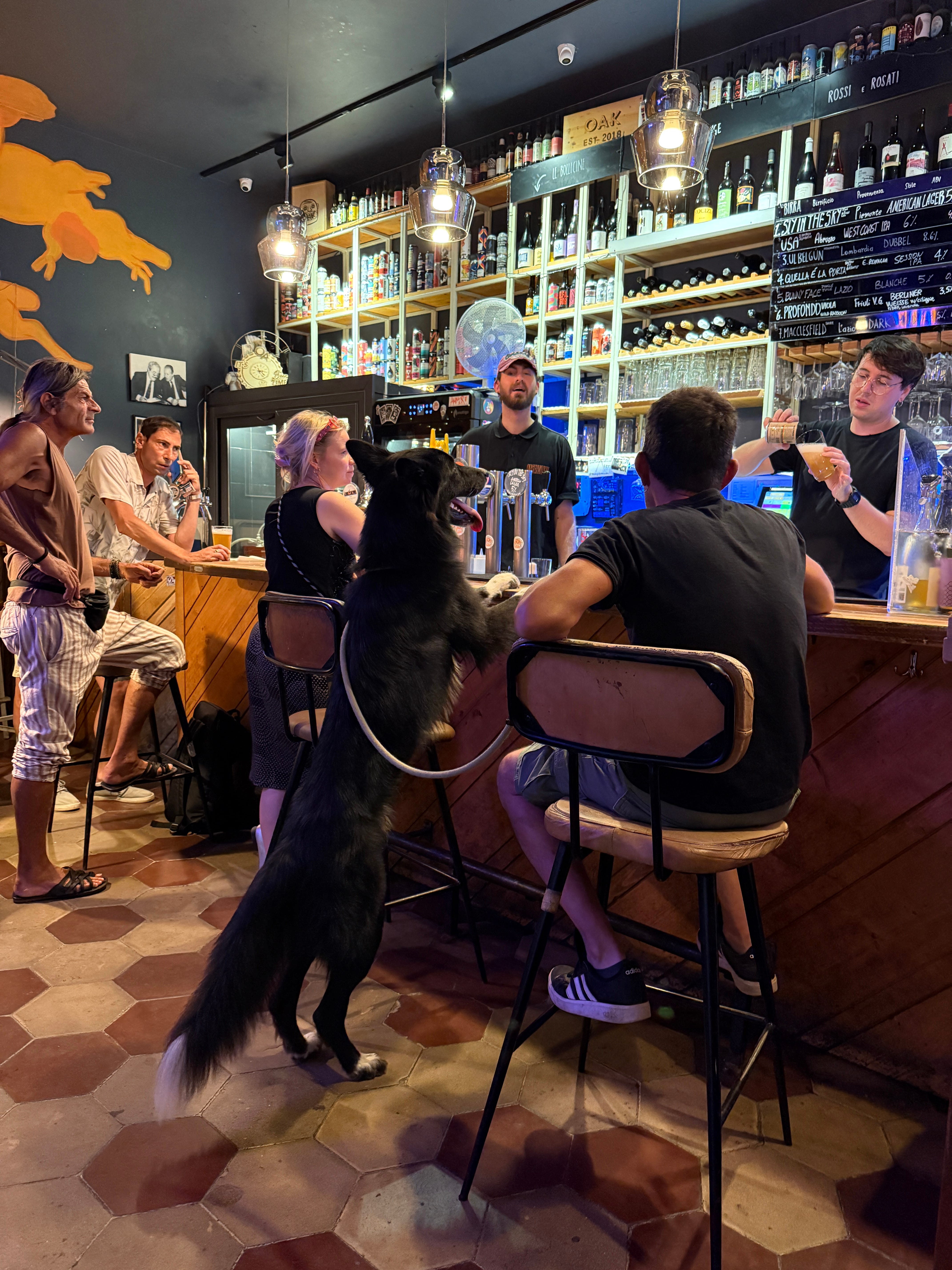
South is where paintings come to life, perhaps as a side effect of the humid heat. What should be static and 2D is animated. A dog asks for a drink, erect and full of elegance, already more stylish than we are, worn out by trying to have our way.
We talk about bon vivants, a little surprised by the number of them around us. We are not part of that crowd. We would like to be, but we lack something essential which we have not figured out. We are seekers of something else. Cheap and cheerful, you said. At least we are cheerful.
Day Two
Overwhelmed, we left again as soon as we arrived, by sea this time, to a little paradise. We returned in the evening, ready to give the city another go. Within reason.
We sheltered in splendour (Northern, Milanese splendour) as we were still considering how to make ourselves bon vivants. It was the wrong step, or at least a step in the wrong direction, because all it achieved was to single us out as tourists, a label that is sticking to us like clingfilm.
But it is nothing a few negronis cannot cure. I love the holy trinity of this cocktail: 1/3 gin, 1/3 vermouth, 1/3 Campari. Father, son, holy spirit. In a wide glass where my nose does not get stuck.
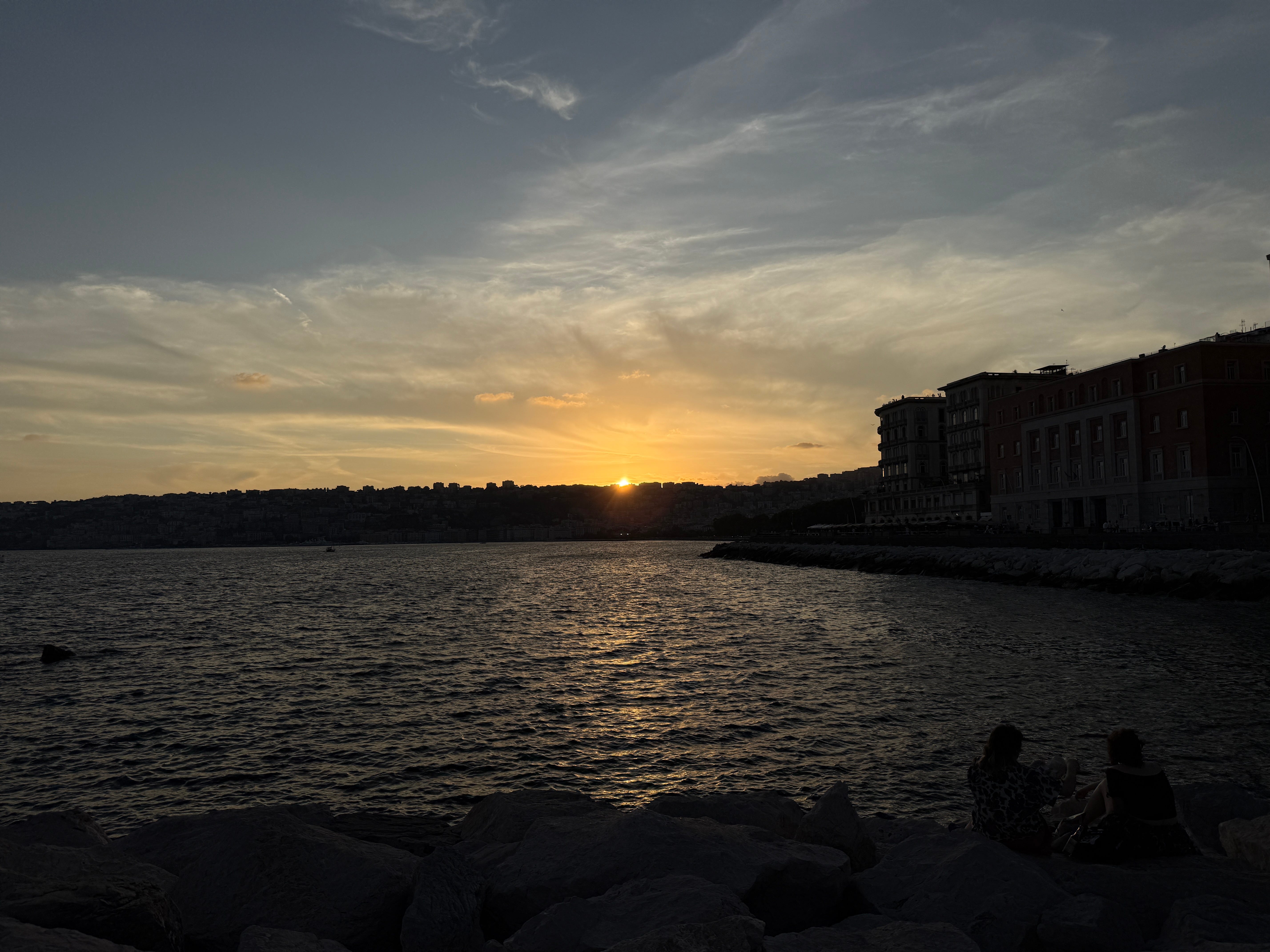
You crafted a detour for us to see a romantic sunset.1 Boy, it was romantic! To witness the death of a day in a city where death is so present was a magical act of worship. All the elements were present, and helped us with closure and celebration as we left the shore arm in arm.
As we walk, I notice that this city is one of deep contrasts. One minute, we are in the cool Spanish quarter, with the youth; in the next street, I am judged by shoppers for my messy sea salt-laden hair. I like contrasts. They give me freedom to choose.
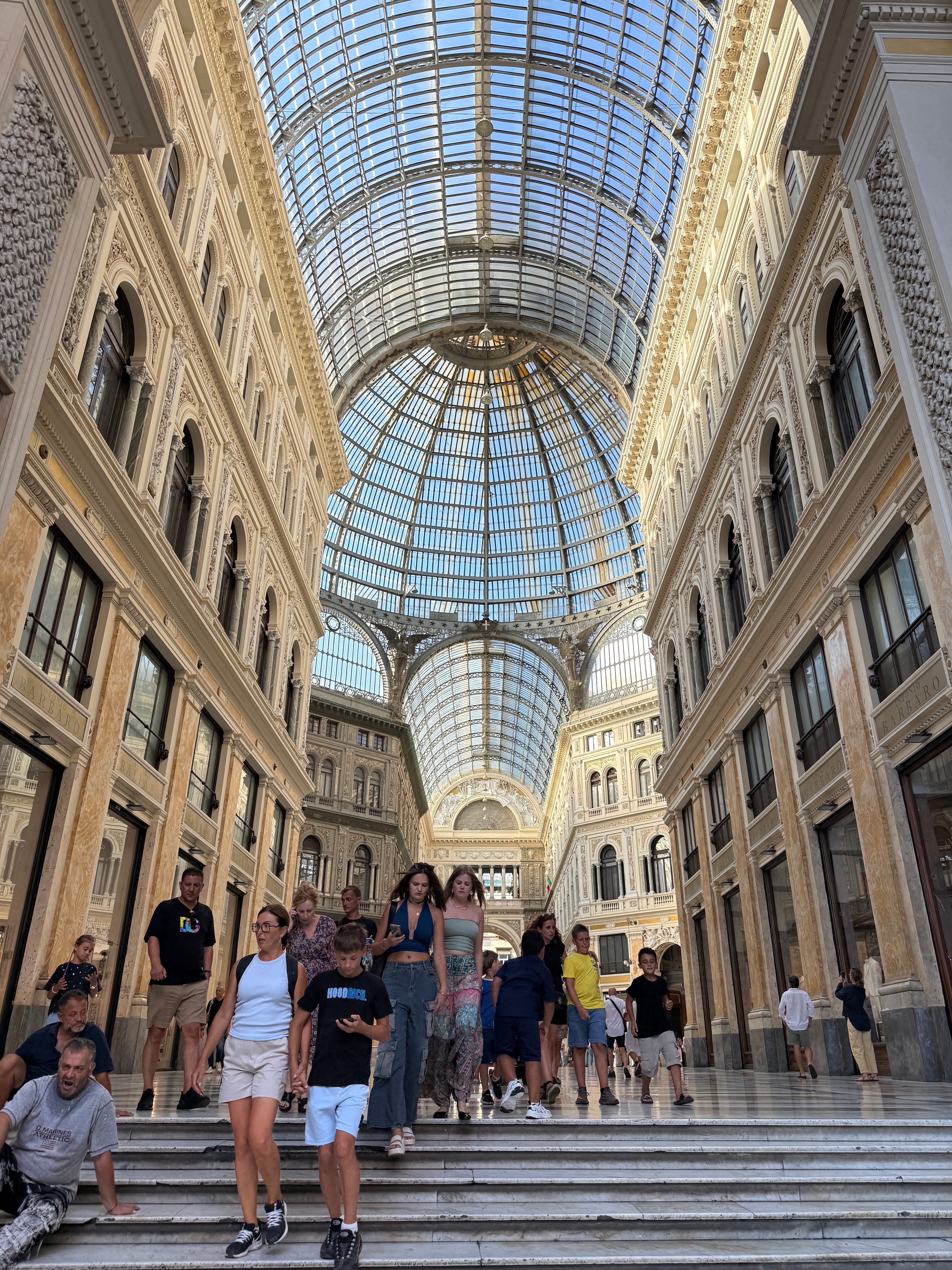
‘Do you feel you are in Naples yet?’ You asked me 24 hours ago. I could not say I did. Something in me was resistant to opening up to the unknown, needing instead to rest in comfort. But now, in this grandiose arcade, I appear to have arrived.
Day Three
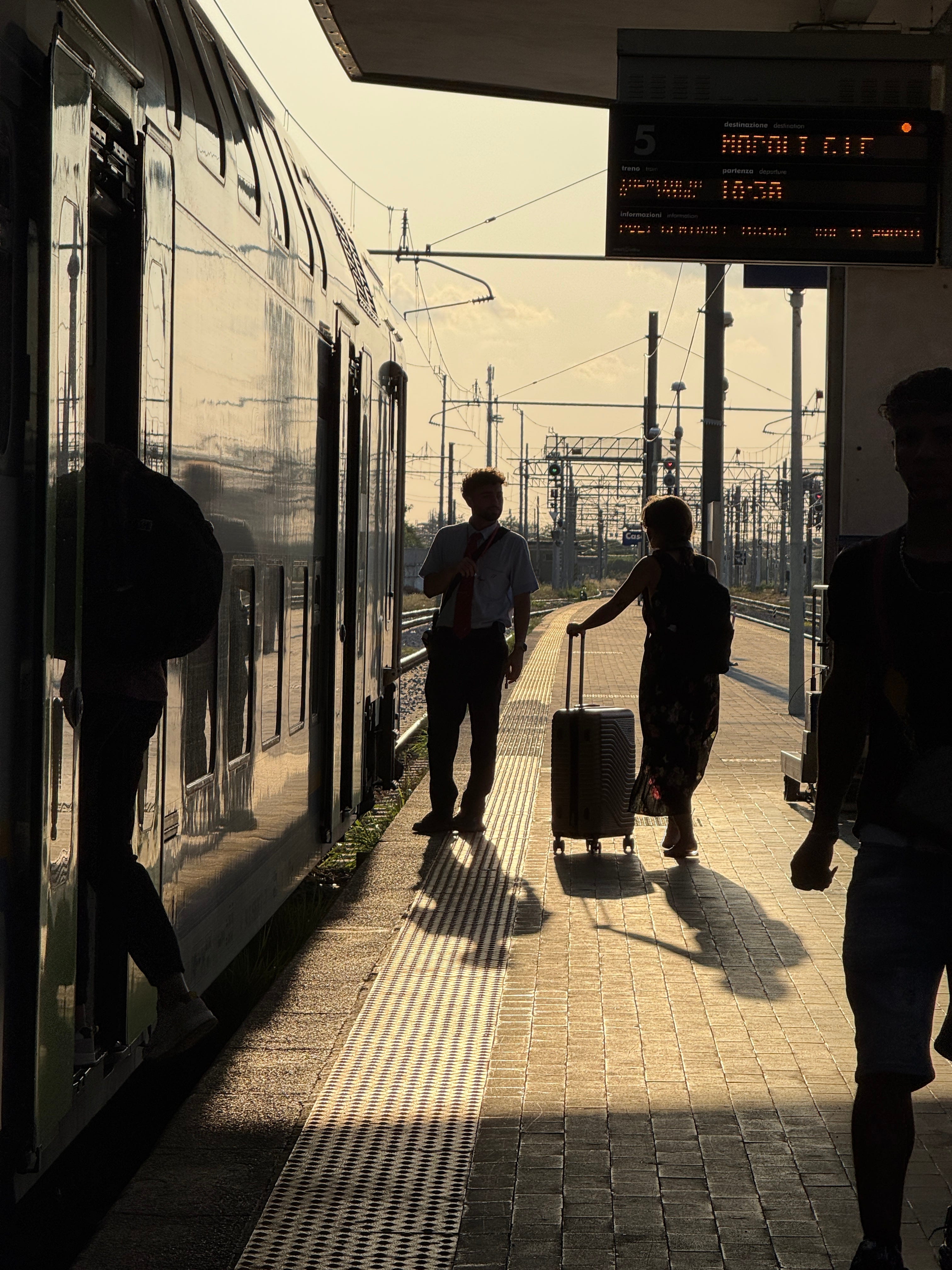
It started in a promising way, with a walk through Sanitá, a town forever changed by a bridge, and five friends who wanted to create a thriving community. I liked the place; it reminded me of other cities in other, long-gone times. These are cities I miss.
The shadows from purgatory, with their squiggly flame, accompanied us all day since we made their acquaintance in the catacombs. We saw the inside of their skulls and some Dominican frescoes displaying dubious anatomy lessons.
Maybe we did not ask the souls the right questions, for they were insistent and did not allow us to get on with our day. Nothing was straightforward since the morning. We went south, trusting the goddess serendipity, but the jester souls kept tripping us. The Royal Palace gardens are closed on a Tuesday, even after all we did to get there. We should have checked, but ChatGPT is overenthusiastic about the schedule and does not collect the basics. We had a perfectly devised plan with no garden on a Tuesday. It could never work out. We ended in a ghost town; the souls were clear they would be heard. I felt as if we were Dante and Virgil, roaming an uncertain landscape, in the midday heat of hell.
At lunch, I ordered, unbeknownst to me, a pasta dish without pasta, with shrimp that were squid and zucchini flowers without flowers. This was meant to be a good restaurant. One of those where you don’t throw napkins away, but you wash them instead. Still, it was tasty and elegantly served.
We were not allowed to leave the town until we did penance, so we took refuge in a station cafe. It feels we are getting more and more away from bon vivancy, practically and conceptually. A bon vivant allows themselves to be done to. We seem to want to do all the work ourselves, straining beyond our means. It takes a while to let go. Knees hurt. We administer negronis.
Day Four
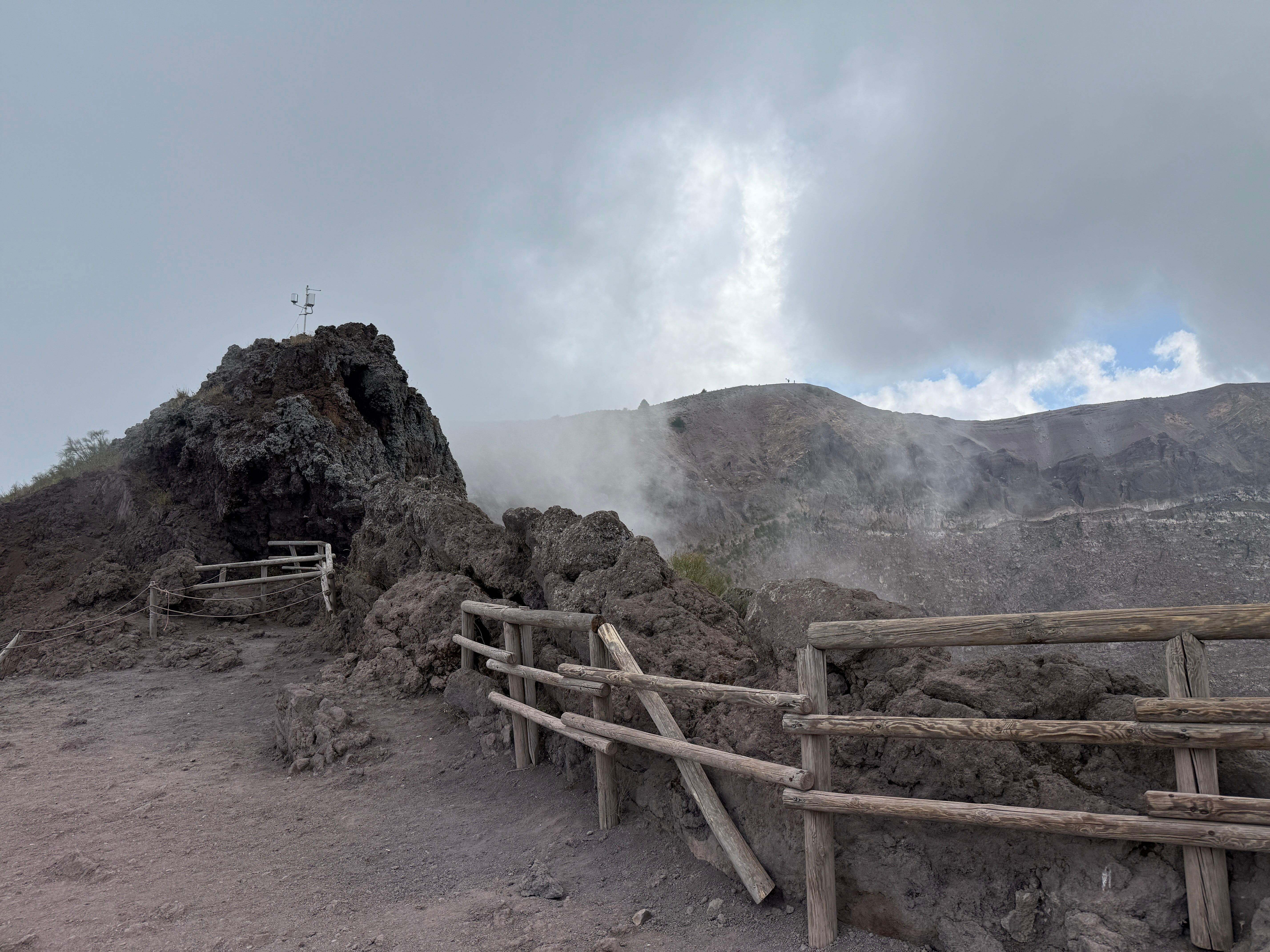
This is what the volcano told us, as we looked into the crater of Vesuvius: ‘Every cause has an effect’. It is a concave space of porous rock, and we are both disappointed that there is no magma. Is it even alive? The warning ‘There will be eruptions in the future’ surprisingly seems to calm us. Living under this threat is the equivalent of meditating as if your hair were on fire. It works to focus the mind. We get excited by the rising heat and the sight of a bar at the top. My beer never tasted better. Maybe sulphur is an enhancer.
We needed the respite, the views and the perspectives as the day started in a shaky way: a train over ten times more expensive than it should have been, an impossible schedule, and the feeling of wanting to give up. I am glad we recovered, and the purgatory ghosts left us alone. The volcano must have reminded them of hell.
I finally have my lunch of pasta with shrimp, the one I should have had yesterday, in the unpretentious cafe next to the station. The guy is genuinely happy to see us again after our pre-climb morning expressos. The dish is excellent, but he runs out of tiramisu. Every single table, regardless of nationality, is disappointed. It must have been one hell of a dessert, as it is barely 1.30pm.
Having started with the cause, we go on to the effect: the remains of Herculaneum. We imagine what it would have been like to live and to die here, among the skylights, the frescoes, the walled gardens, the pools, the lava. It is beautiful, as well as impressive, that they trust us to guide ourselves through time and space. We are free to roam.
On our way back, we return to a German bar already visited. They know how to keep the beer cool and the olives, which we have to beg for, and we do – they are spectacular, so it allows us to put up with the sulky waitress. What is the dividing line between efficient and resentful? I cannot tell. There is not a lot of super-legitimacy here, but I must admit that people are beautiful, especially the bin men.
Day Five
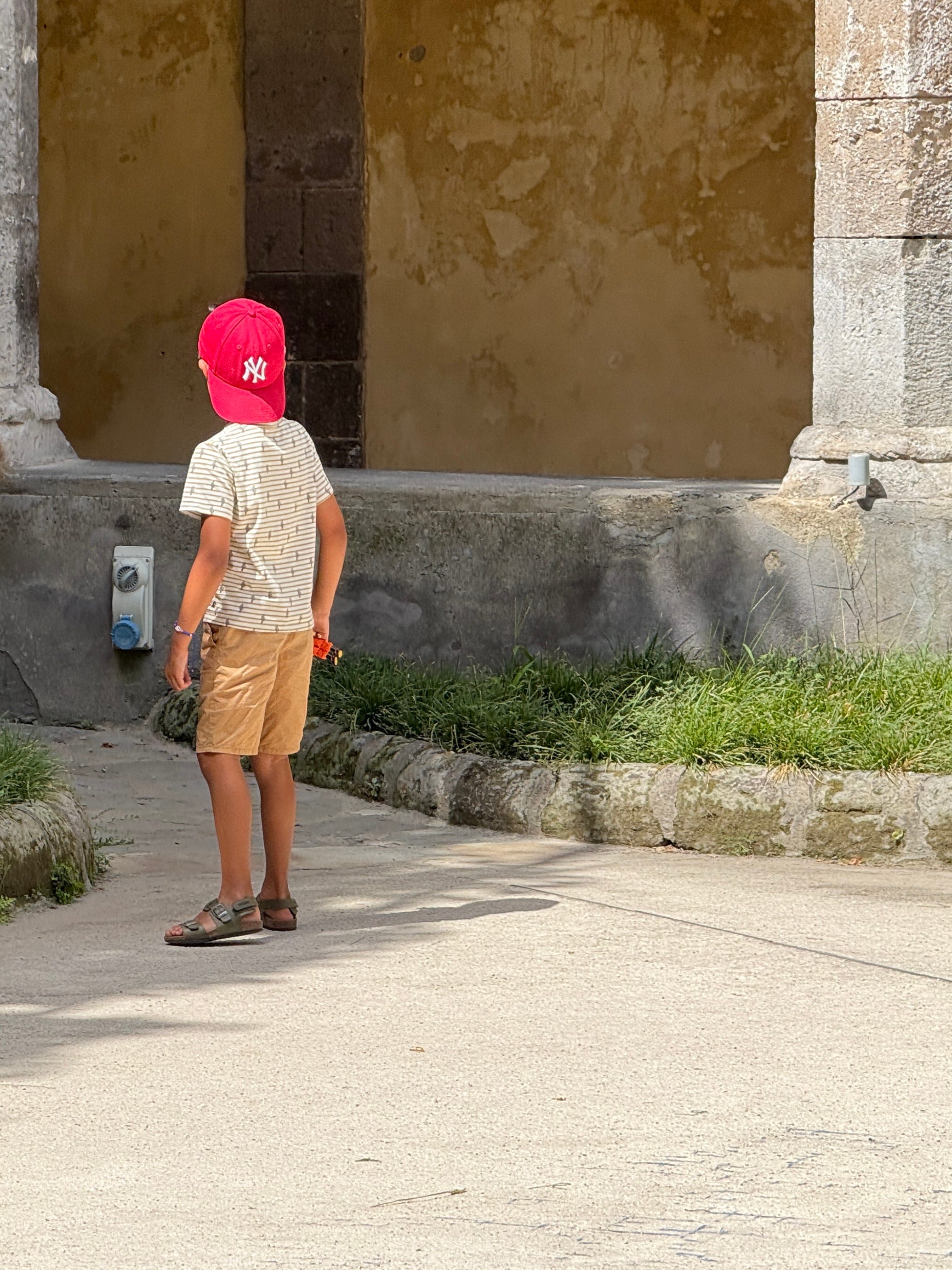
This is not the whole picture. Just out of frame is the bewildered face of an old woman. This woman was not, as we thought, his grandmother but a woman who had collapsed in the cloisters of a Sorrento monastery. The boy ran to his father for help, and we ran towards her. She is fine now, just went out without a hat or water.
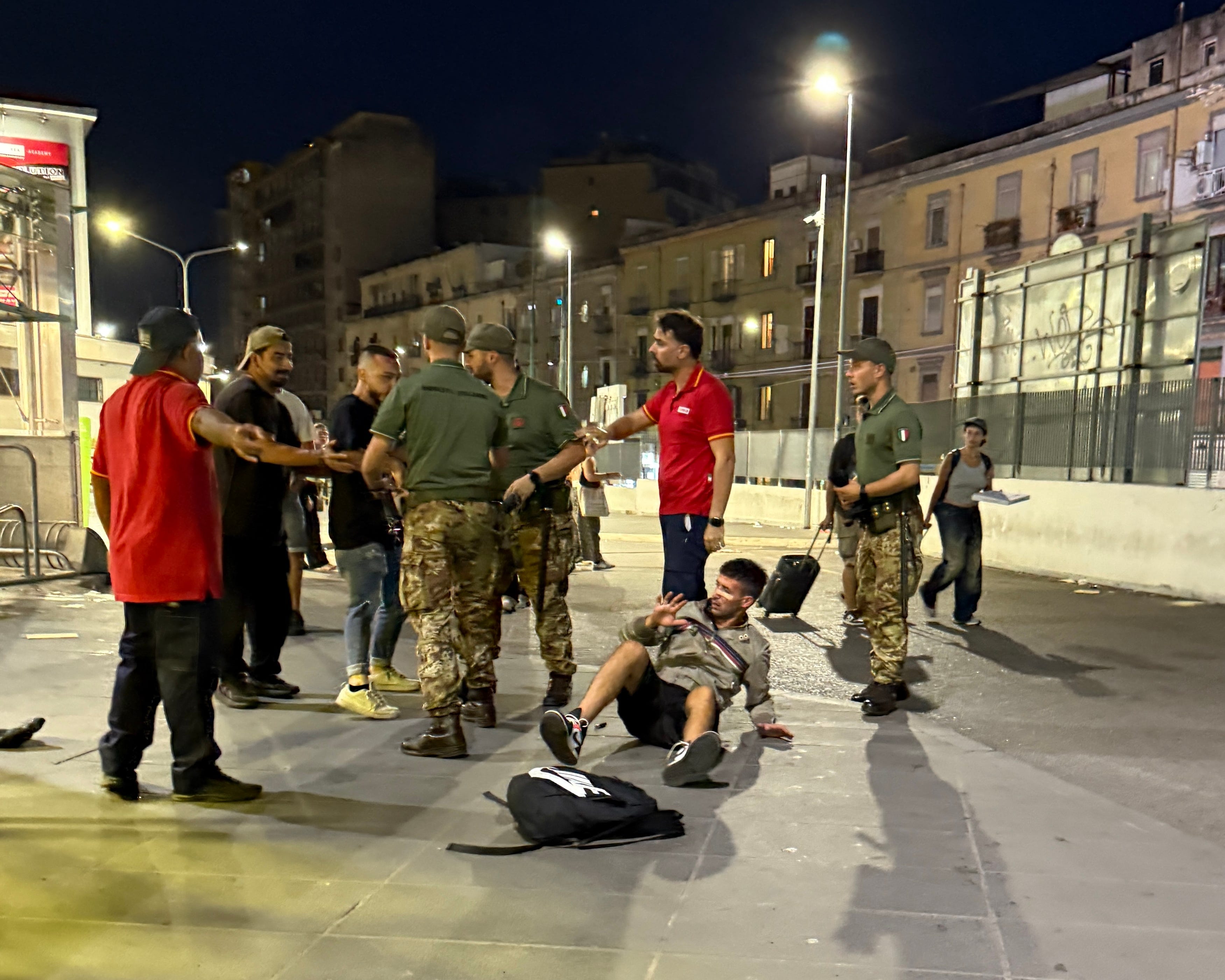
Earlier, we saw a vigorous shouting match on the train. Later, we will see supermarket security kicking a man in the kidneys as the army rushed in. It is not even full moon, and Thursdays are quiet in this town, people gathering energy for the weekend.
I have the full photo of the pietà collapsing woman. You sent it to me to write, but cropped it for everyone else for the sake of dignity. At that time, we did not know she was fine. We considered what it would mean if she weren’t, if we had just witnessed THE life-changing event. When the kicking happened outside the supermarket, you instinctively took out the camera.2 You want to be a photojournalist, to look at the events that make up life: of a person, a community, humanity, the planet.
What does it mean to look, to witness events? And to be looked at, with that image captured, held, reproduced? We did not even know what was happening. It took its time to fully form in our awareness. Looking is a reasonable way to understand, to explore and to research. But with care. Trauma is the image one cannot unsee.
Back in Naples, the surly girl at the German bar is cheerful, and we try to work out why.
Day Six
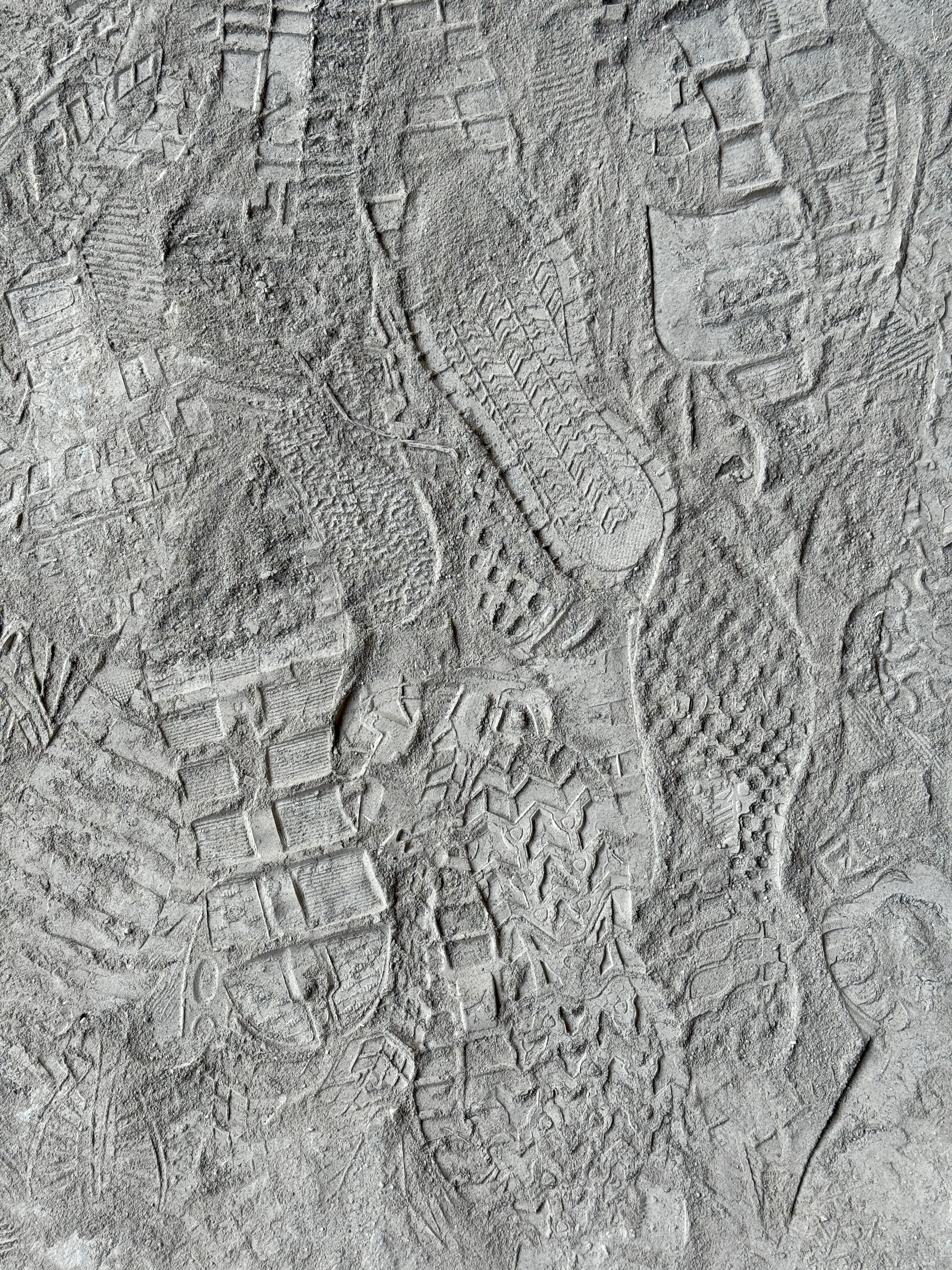
For everything there is a cause and an effect. Everything, absolutely everything, leaves traces. I think of traces as sketches in the world, maps that tell how to orient ourselves in our time on earth.
On our last day in Naples, we visited Pompeii to understand what happened under the volcano, and what it was like to live in 79AD, especially on that fateful 24 October when everything was swallowed by smouldering ash. Pompeii is an amazing place, worth a world-wonder label: the scale and beauty are monumental. It is better preserved than I envisaged, and I was moved by the delicate frescoes of amphoras in a black room. The theatre is impressive; the brothel, curious; each district characterful. As in Herculaneum, we are free to roam and make our story, integrating this ancient tragedy as best we can.
We have lunch in the cafe, dusty and tired from a visit that has already lasted 4 hours, and we know has some more to go. Among the endless supply of arrogant tours, I realise that, in Pompeii, the remains of the city enter into a dialogue with the traces we are leaving right at this moment. Crossing paths with the guy in the skull t-shirt, the Thespian guide making every detail dramatic, the Spanish family who don’t know where they are going … all intersect with us, the short British couple. This is also a relationship, however infinitesimal, and with every relationship we change imperceptibly.
The imprints we leave on each other, like those on the dusty vias, might be as Italian gestures in the wind, short-lived, the residue minimal. Others are like marks on lava stone, more permanent. Some, like the traces you leave in me, my love, are like our names etched in granite, impossible to erase. Conscious of how I interact, I want to do it well: I smile with mouth and eyes, I let people pass in front of me. If Vesuvius erupted right now, what would they find?
We left the best till last as we exited through the Villa of Mysteries to go to Vomero, chasing some of the Elena Ferrante feeling. Her books are what brought me here. In the fresco, a Dionysian initiation rite is explained with some of my favourite words: transfiguration into an imaginary.
Day Seven
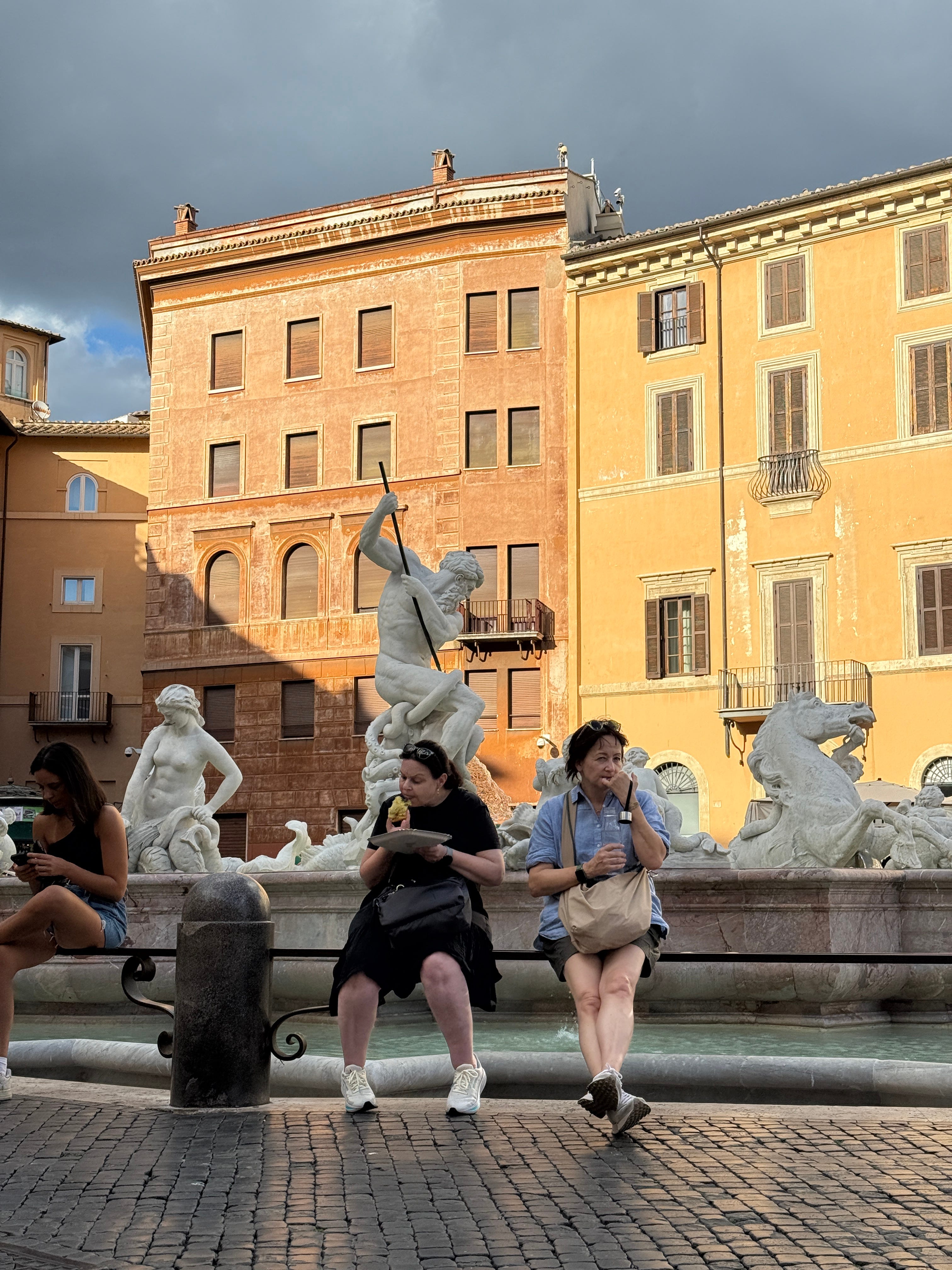
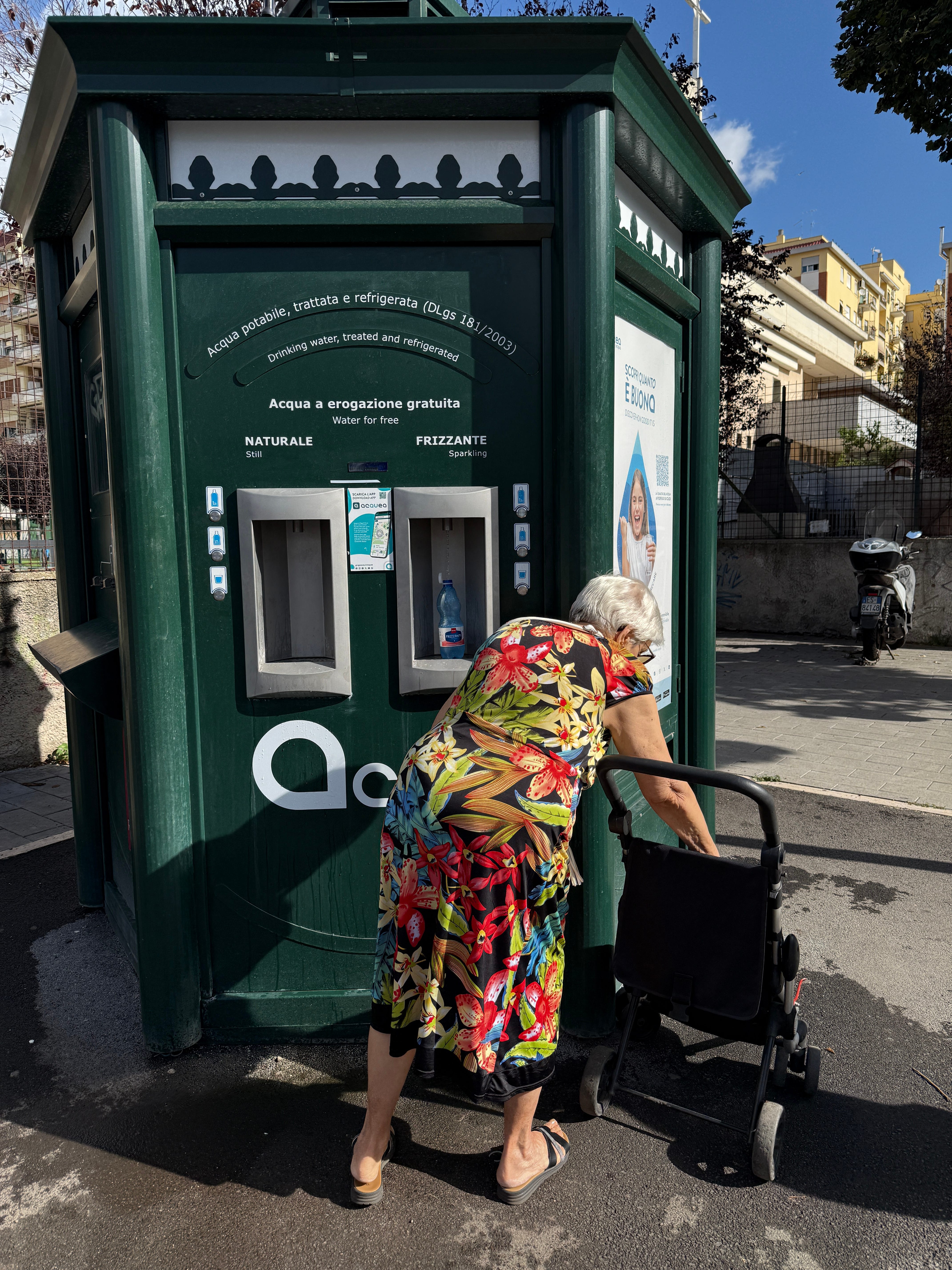
I think of the Neapolitan character as we are in Rome for one day, and I am afforded perspective. Here in the capital, they have heavenly-tasting frizzante water on tap, and an elderly woman comes with a shopping trolley of empty bottles to fill them up, forming a bewildered queue behind her.3
Rome is a city that has a country inside. In the Vatican, we fulfil a lifelong dream of seeing the Sistine Chapel, but surprisingly, I am more in awe of Raphael’s School of Athens, the Matisse room and the little Morandi paintings, which echo the amphoras of Pompeii. Morandi is one of those underrated artists who I think should be better loved.
To get us in a longing mood, as we leave for Scotland tomorrow, we visited two of the flats Muriel Spark lived in in this eternal city. One was in Piazza di Tor Sanguigna. The other, ‘in a little street between Piazza Farnese, where Michelangelo added a floor to what is now the French Embassy, and the great Campo dei Fiori’. Did she conceive here her transfiguration of the commonplace? We sit in Piazza Navona, where she hung out. I try to see her among the fountains, to celebrate Camilla’s message: Edinburgh will finally have a statue to her.
So, the Neapolitan character … Elena Ferrante got it right. It is a city of contrasts, of hard work living under a volcano, not easy, not spacious, not transparent, run down and tatty. But in its cunning, in trying to get the most out of the tourists, which straight-up-and-down Rome does not overtly do, there is charm. I see myself here more than in Rome, too grand and too religious for me.
Back south, the German giant mixes me a last Negroni. Surly is nowhere to be seen. When Napoli score a goal against Cagliari in the 95th minute, everyone hugs.