


“At 50,” wrote George Orwell, “everyone has the face he deserves.”
Sadly, Orwell died of tuberculosis at the age of 46, so never got to test the theory on himself. However, the photos we have from a few years earlier (aged around 38) show a man who is curious, alert, yet marked by his experiences.
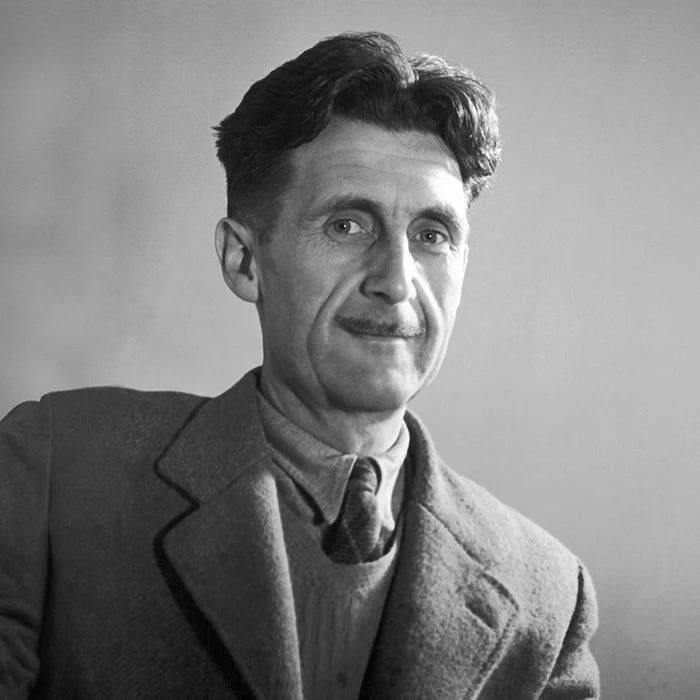
Although the BBC photographer may have chosen a flattering light, there is little indication that the image has been manipulated. The lines in his face have not been airbrushed away. The eyes retain a spark. It feels truthful.
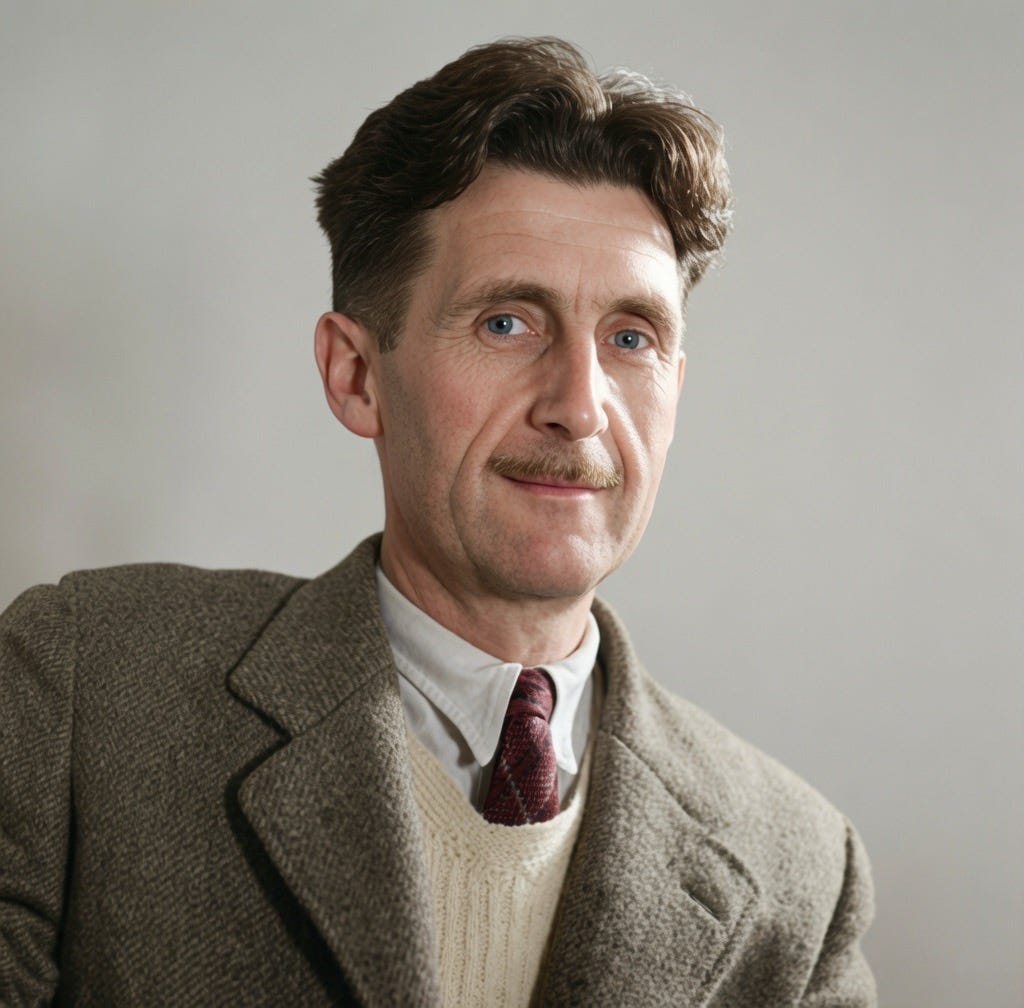
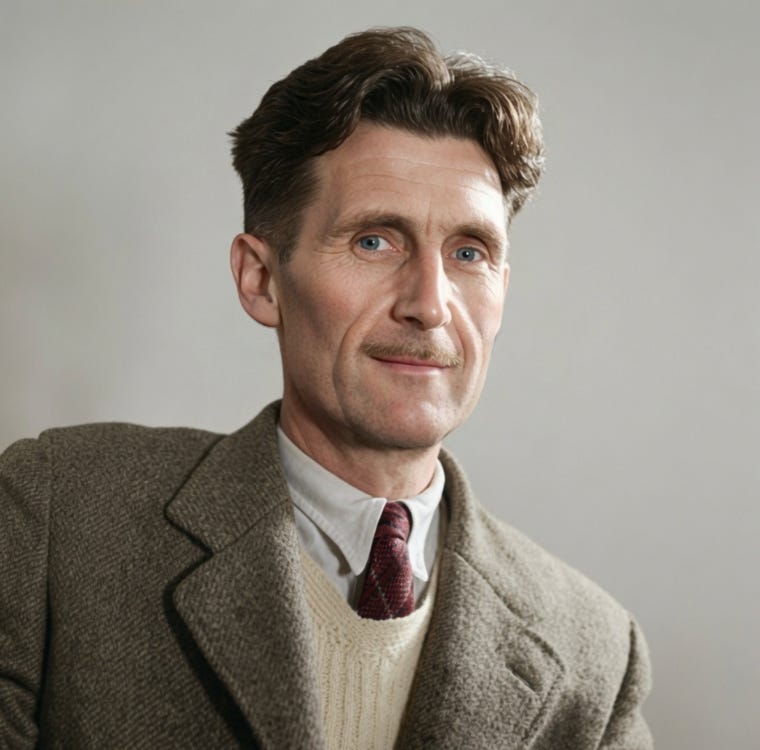
Compare that to Grok’s colourised version. The skin is glowing and the hair is glossy — it feels slightly off, like a waxwork. Nevertheless, given Orwell’s interest in truth and propaganda, I thought it might be a good image for this week’s post about FaceApp.
FaceApp is an image editing tool for smartphones that allows users to subtly — and not so subtly — process their portraits. The most playful part of the app let you see what you (or George Orwell) would look like bald, as a surfer, or as the other gender, among other presets.


There’s an uncanny quality to these portraits; it’s like encountering a new relative. And it’s all the more magical in that it only takes one tap to totally transform the image.
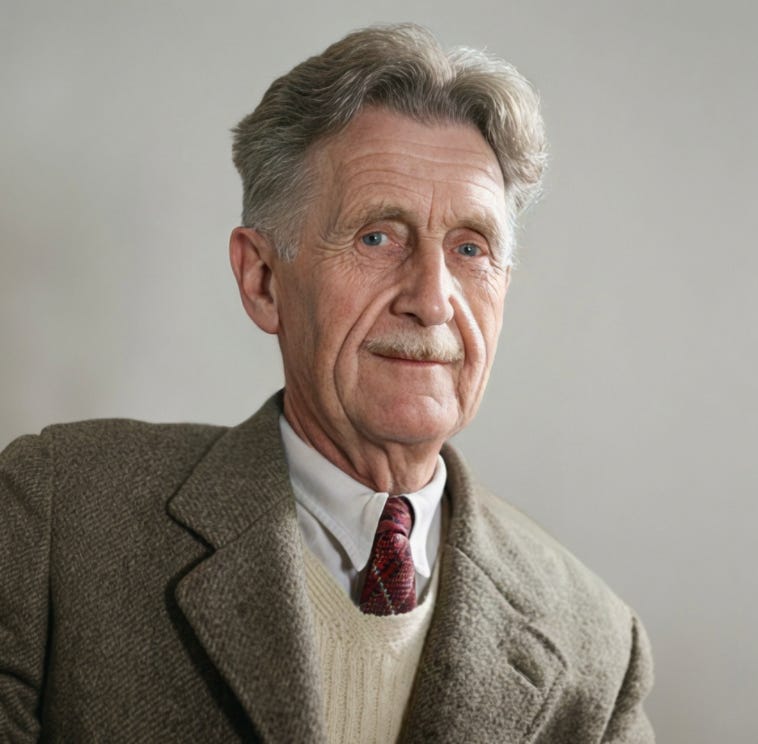
Viewing the ageing filter is poignant when it’s someone else, but a horrific premonition when it’s yourself. It is therefore unsurprising that most of the app’s functions are about making your face look “better”.
But what is better? People like Clavicular (Braden Peters), an online streamer adjacent to the manosphere known for looksmaxxing, have made profitable careers trying to lay out the criteria.
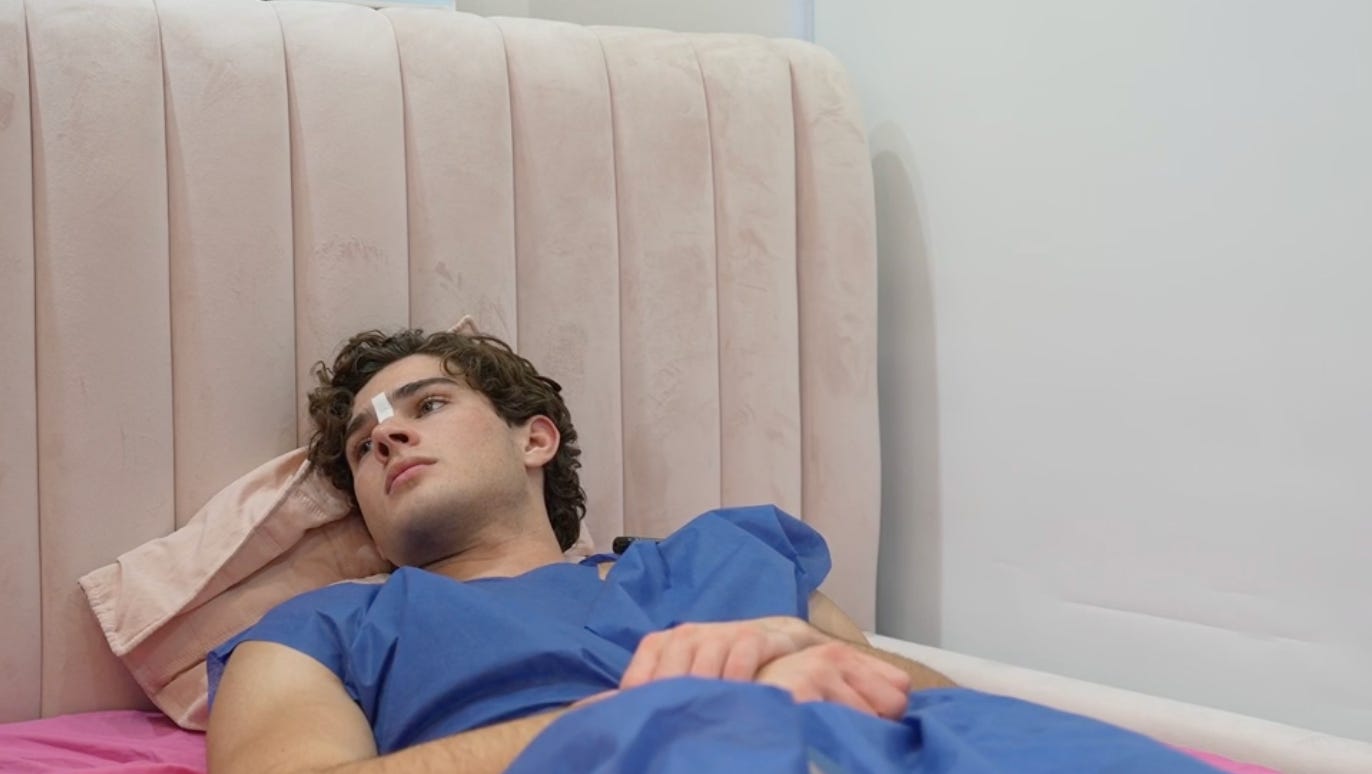
For Clavicular, self-improvement can mean taking a hammer (or the surgeon’s scalpel) to sculpt the cheekbones, square the jawline, and narrow the nose. And the result is a distinctive look that is more or less achievable — in JPEG format — in FaceApp, as seen below.
The danger in tweaking our self-image via filters is that we end up wanting to recreate it in reality. It has been estimated that the British spend over £3.6bn a year on “aesthetics”. I wonder how much of this is due to the self-fashioning on apps like FaceApp. Have you noticed how modern faces, with their plump collagen-injected lips and smooth foreheads, have begun to look the same?
There’s a tragic vanity to seeing oneself younger and prettier. When the gap between the ideal and reality is too great, it messes with our sense of self. Recall the TikTok trend from a few years ago where middle-aged people would cry after seeing ‘themselves’ through a teenager filter.
In 2017, FaceApp caused controversy after introducing an ethnicity swap feature. This was swiftly removed, but gender swapping is still available, leading some transgender people to debate whether the app causes dysphoria or is affirming.
Beyond the more egregious presets, FaceApp is essentially a Photoshop substitute to make glossy portraits. For anyone who works in marketing or edits headshots for a living, these tools will be a godsend. A few small adjustments, done with taste, could protect the ego of your client and help you keep your job. We are surrounded by photoshopped images of models; why shouldn’t everyone have access to such tools?
Well, there is a quote that is often misattributed to George Orwell: “In a time of universal deceit, telling the truth is a revolutionary act.” That’s basically how I feel about never editing my photos. If I edit, it is to try and bring out the truth, not mask what is imperfect. Integrity is everything.
This is not a sponsored post, but it could have been.
A week ago, a marketing agency got in touch offering me $500 to write about FaceApp. Offers like this are often scams, so I was wary. But I played along, saying that I would do so if I had editorial independence.
They reassured me that I could write whatever I liked; they just wanted to factcheck the piece. But it soon became clear that certain topics were off-limits.
A contract granting them a “worldwide, perpetual, irrevocable, transferable […] license […] to utilise Talent’s [me!] performance, name, social media handle, photograph, voice, picture, likeness […] in all forms of Media, whether now existing or later developed” made me feel like I was selling my soul. So I declined their offer and wrote this instead.
Integrity is everything, but I still need to live. If you would like to support The Crop do consider a paid subscription.
It's like seeing what's done to a dead face in a mortuary.
$500 is a bit cheap for all that anyway. Cheers, Neil.