


Of all the myriad forms of photography, the one that excites me the most is reportage. I love reading about people like W. Eugene Smith, the pioneer of the photo essay, and Philip Jones Griffiths, a photojournalist who spent years in various war zones. These heroic figures not only took the photos but also made ethical decisions about how the story should be told.
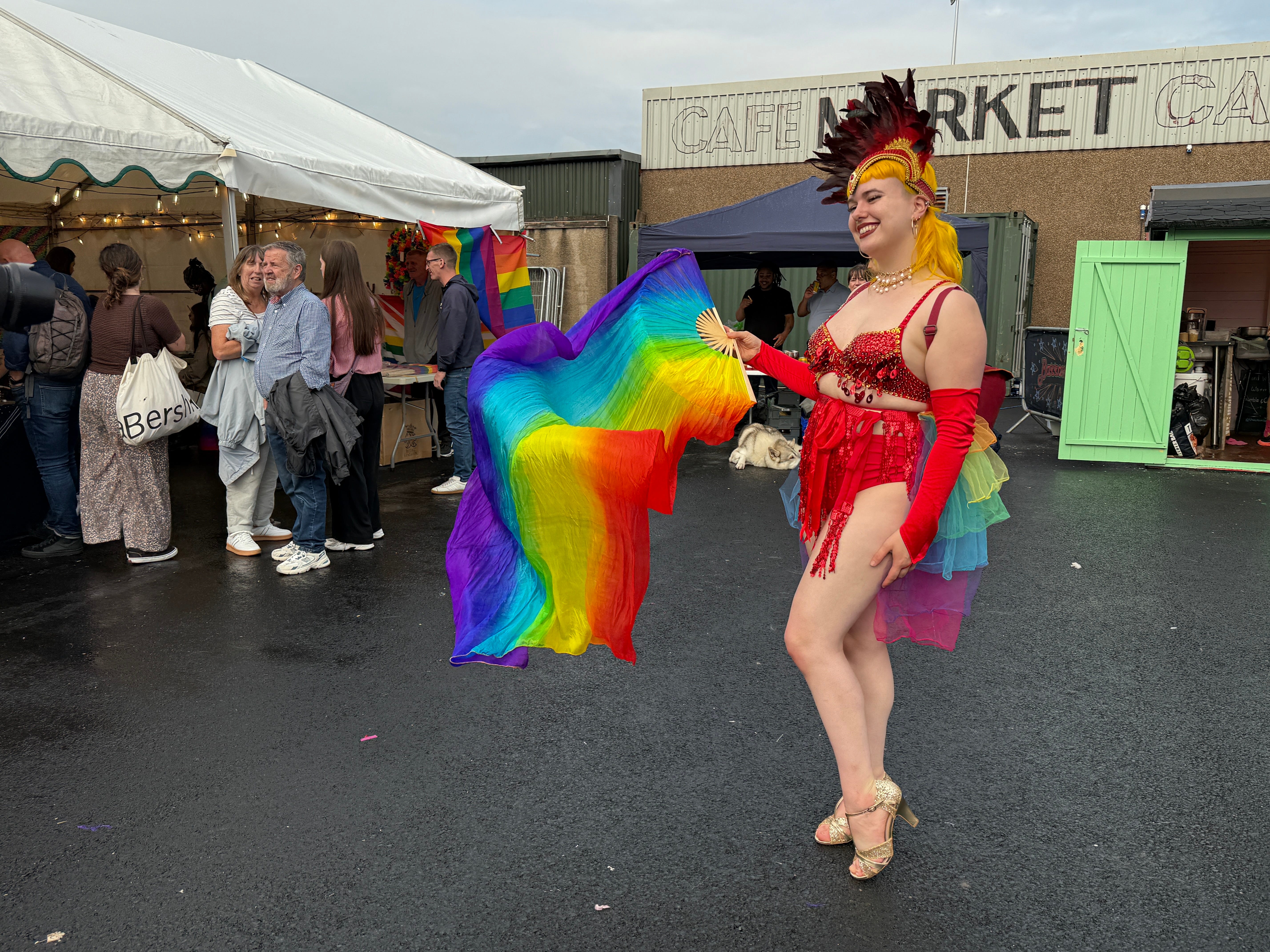
However, my initial reason for documenting Pride was rather superficial: I love colour.
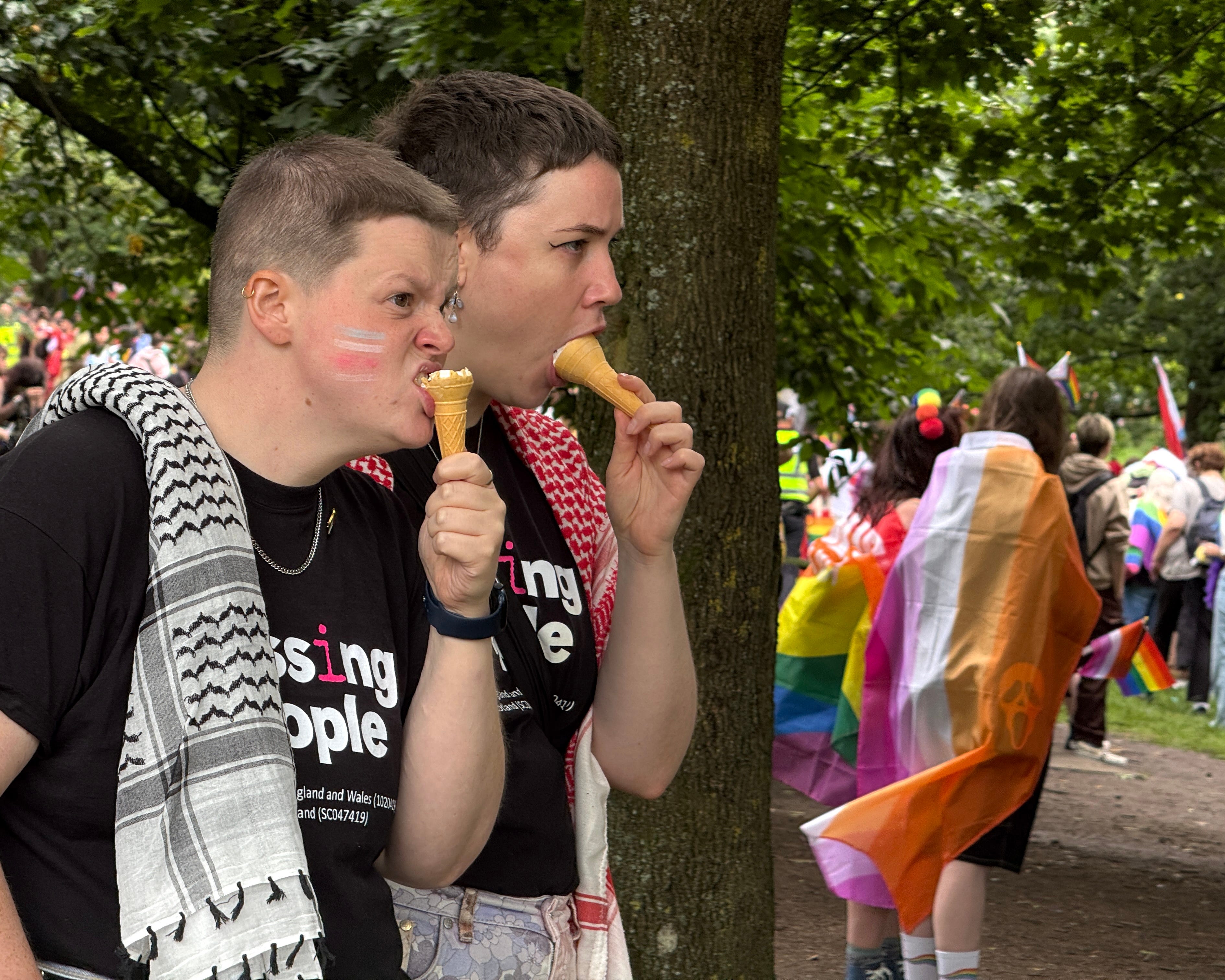
I also love humanity in all its diverse forms … and you can’t get much more diverse than Pride. Here is a Martin Parr-esque photo of a couple eating ice cream.
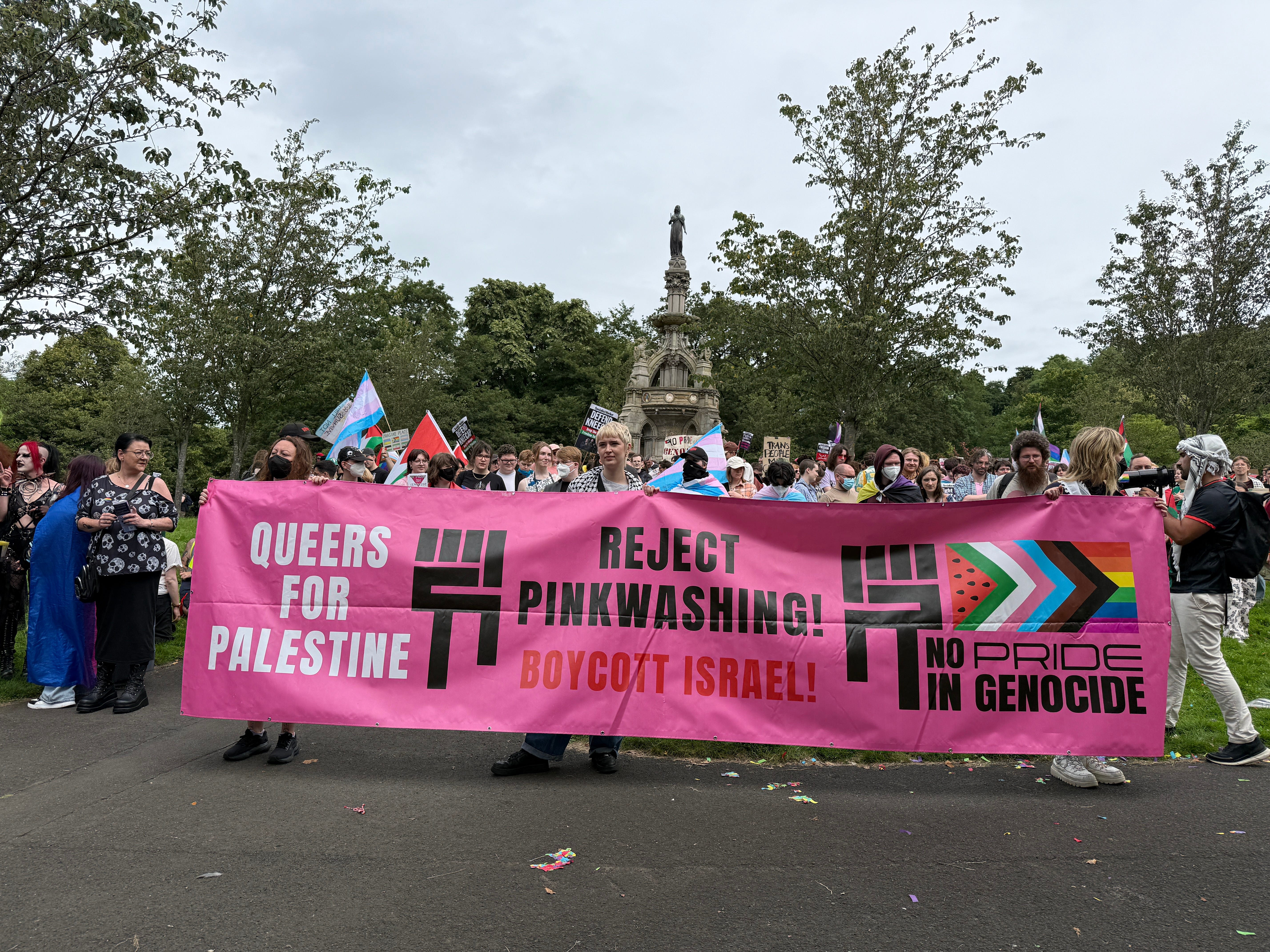
At Kelvingrove Park, I encountered the ‘No Pride in Genocide’ counter-protest, which resists the corporate takeover of Pride by banks like JP Morgan that profit from the occupation of Palestine.
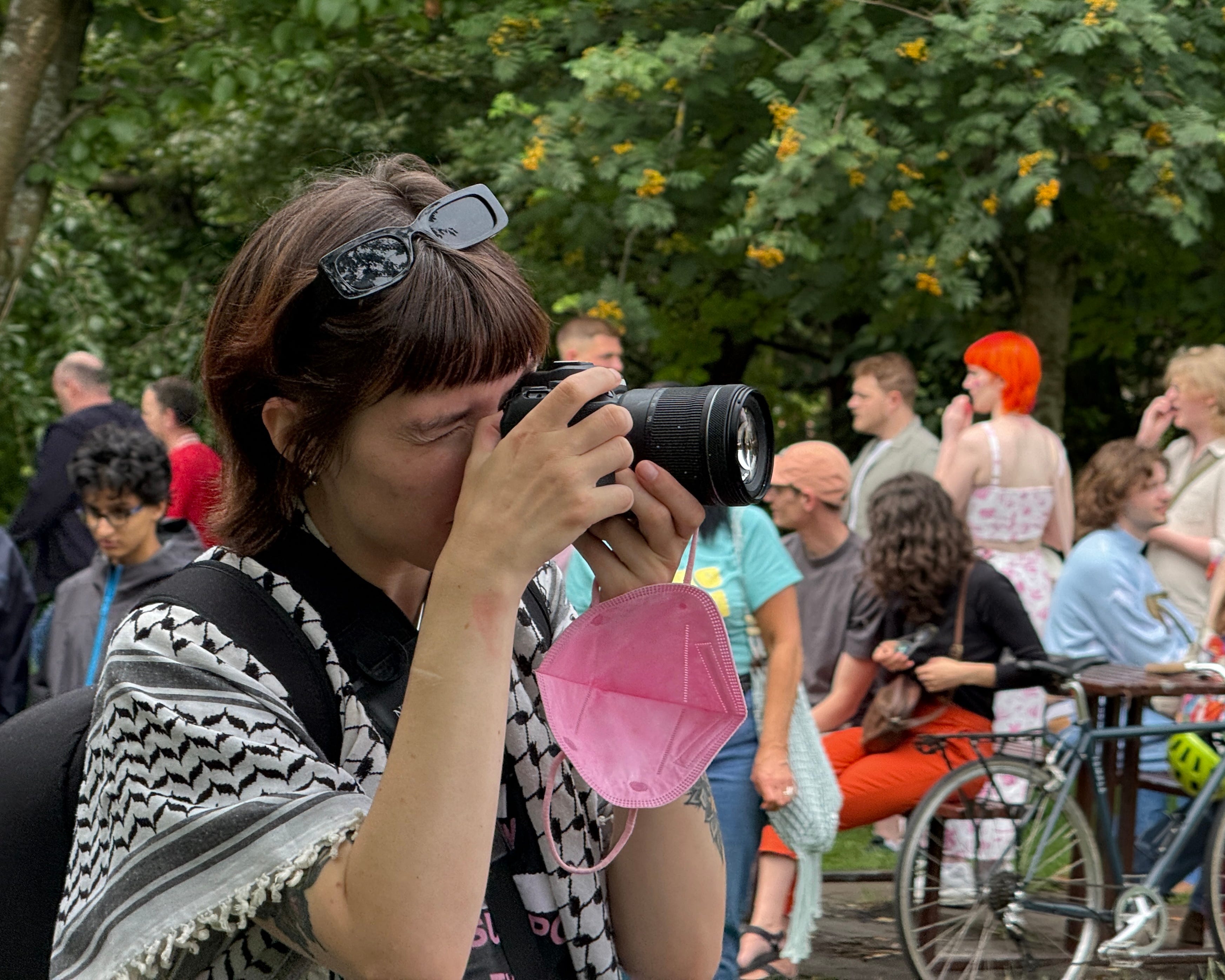
Siobhan Chalmers, a superb activist photographer, was there documenting the protest. Chalmers rejects the idea of ‘neutral’ photojournalism and does what she can, in both photography and life, to resist.
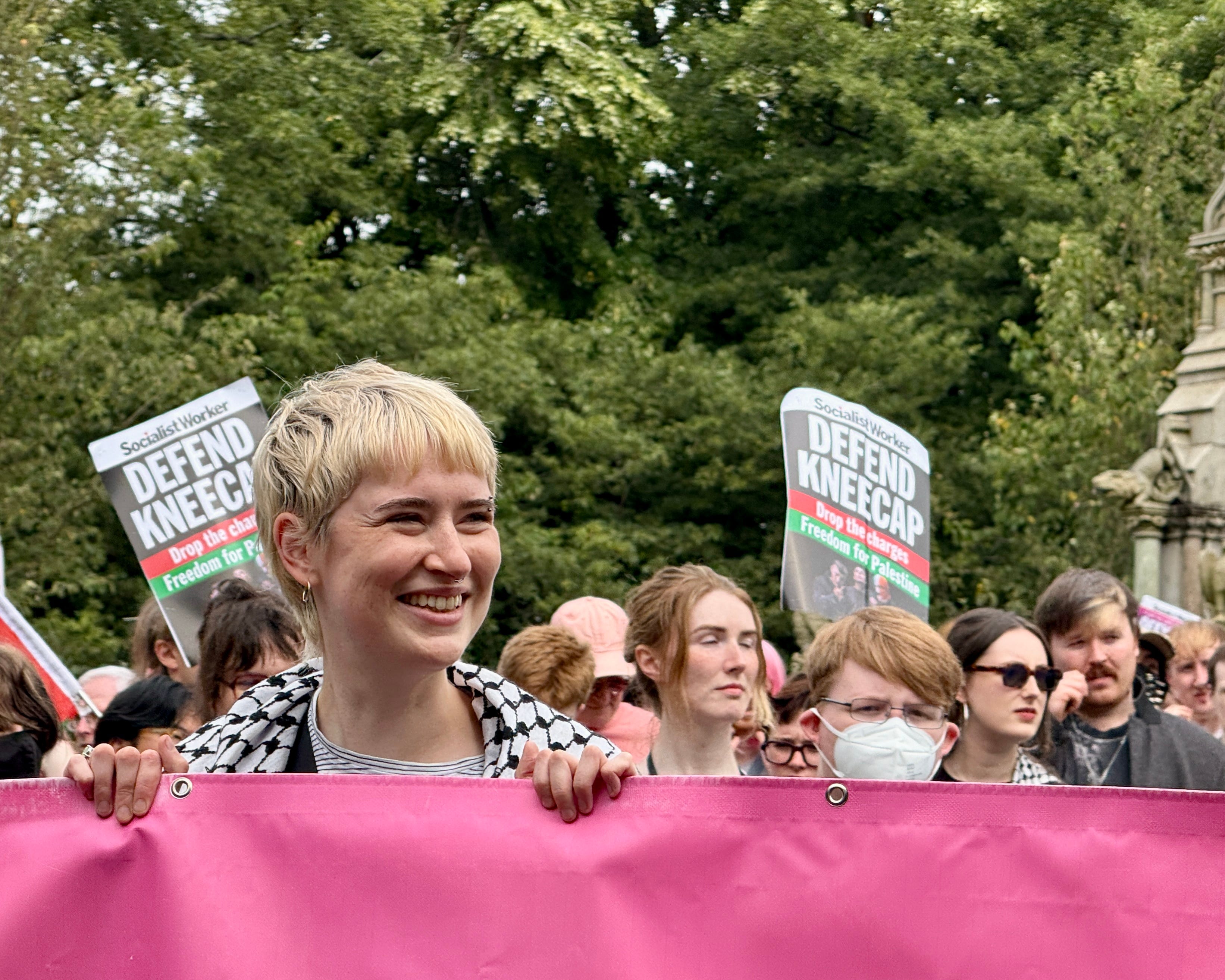
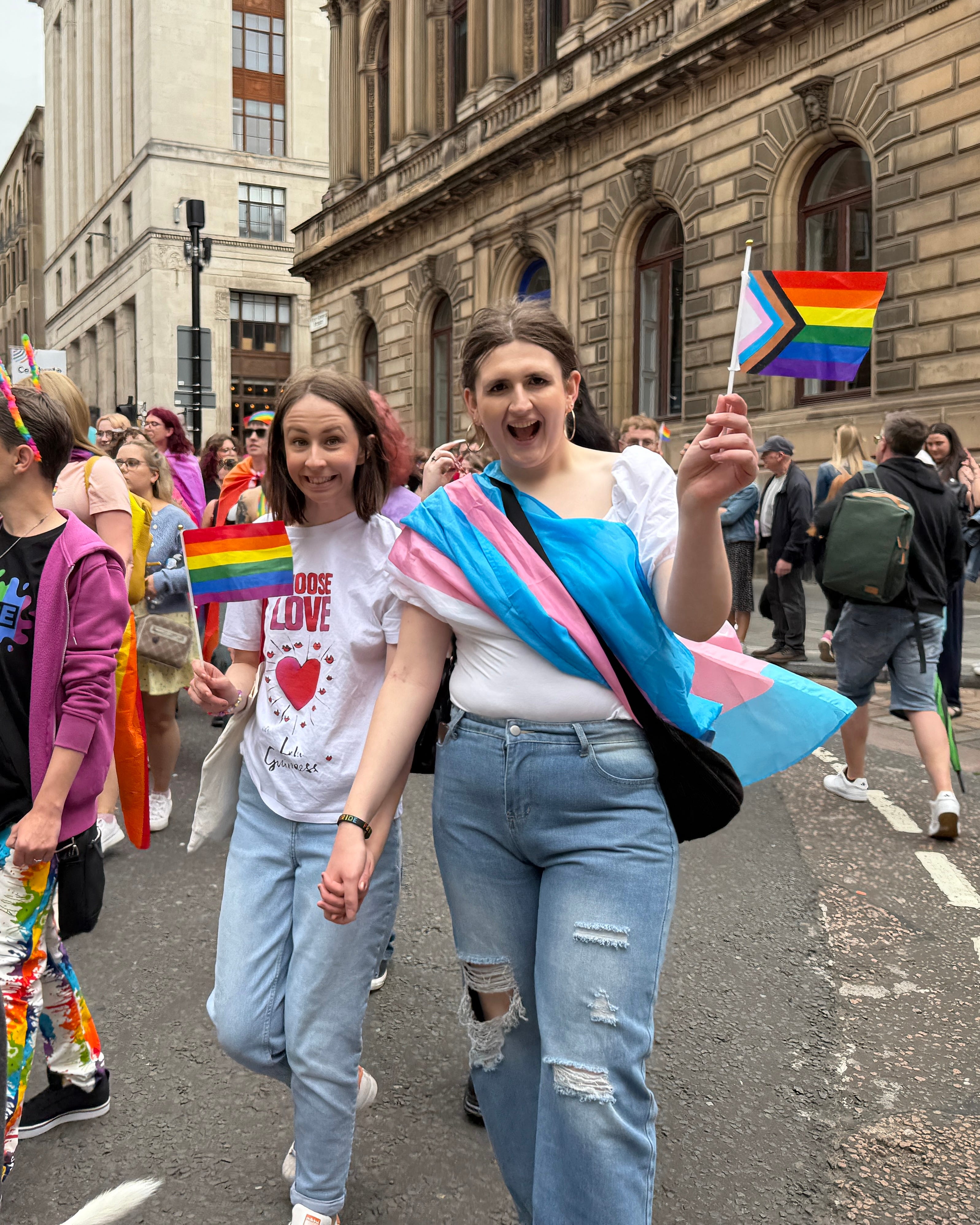
Activist photographers, like Siobhan (and Fraser Kerr, whose work I’ve enjoyed a lot recently), tend to depict moments of intensity. Their images convey the urgency of this protest, this cause. My photo above of a smiling marcher makes it look more like a fun day out than political theatre. Seeing it made me pause think about how the narrative was told.
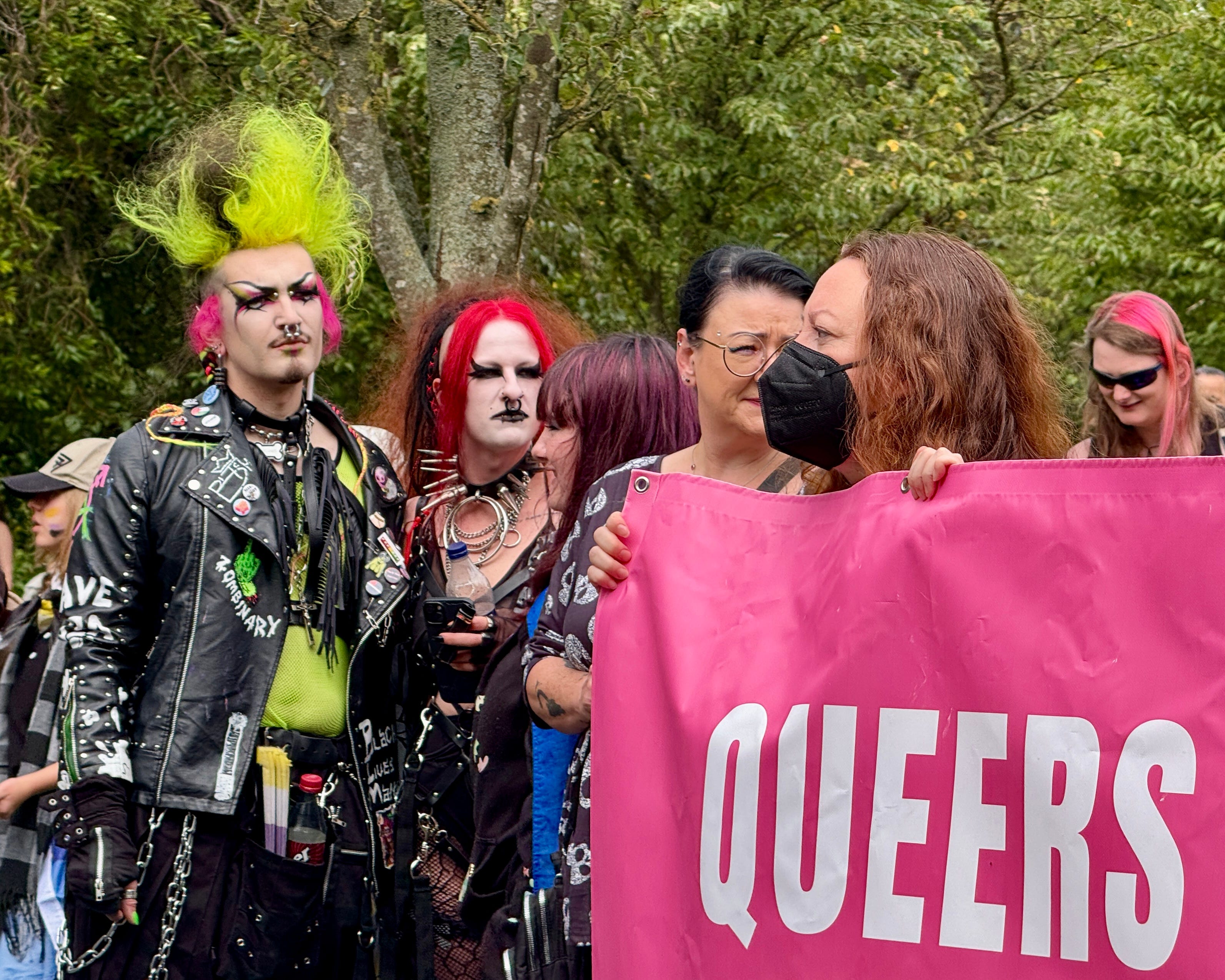
Because protest is often performative. How else can you attract attention for your cause in a world that is constantly distracted?
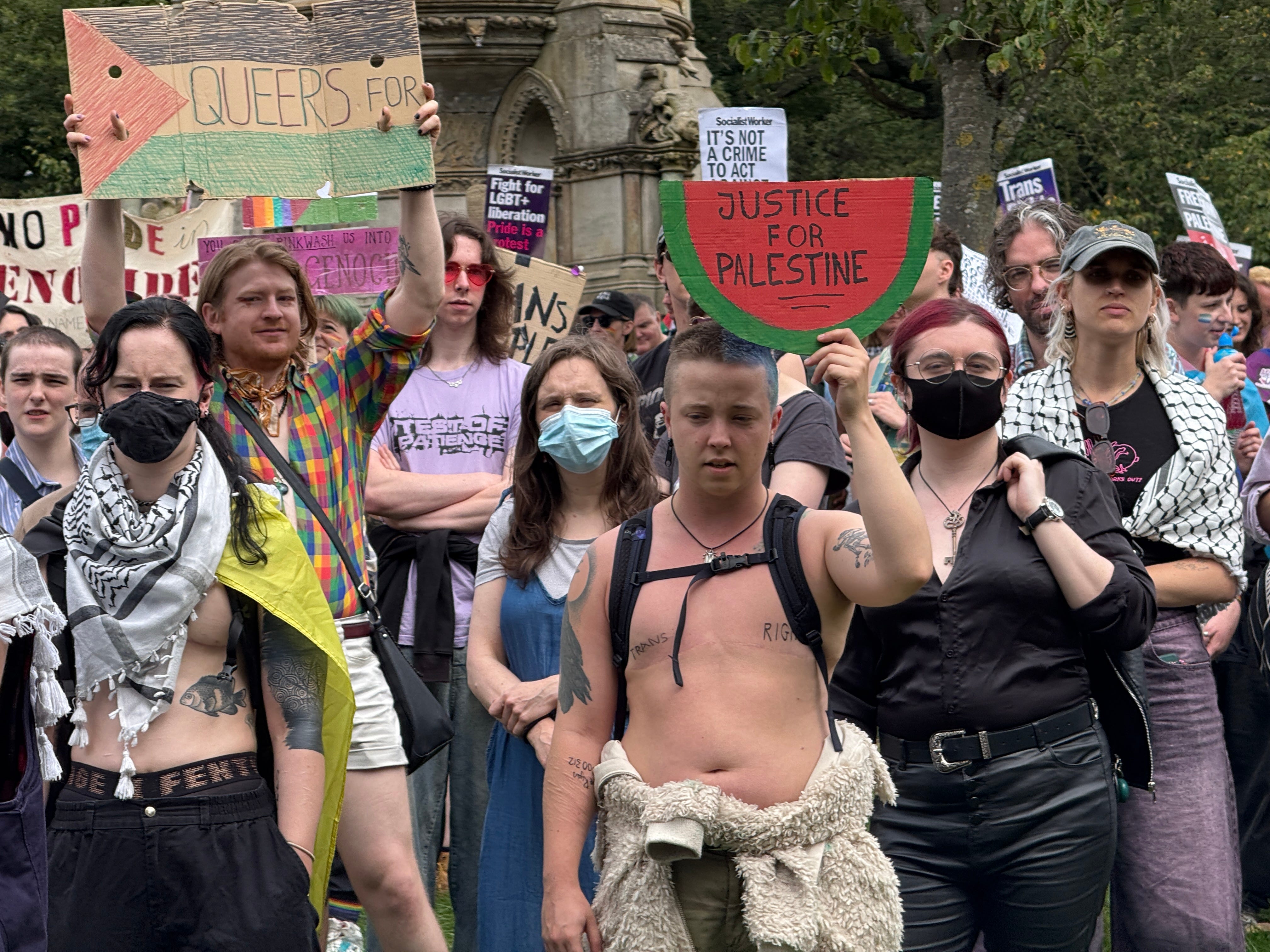
A protest is an opportunity to show solidarity with fellow activists, but it is also a chance to be part of the spectacle.
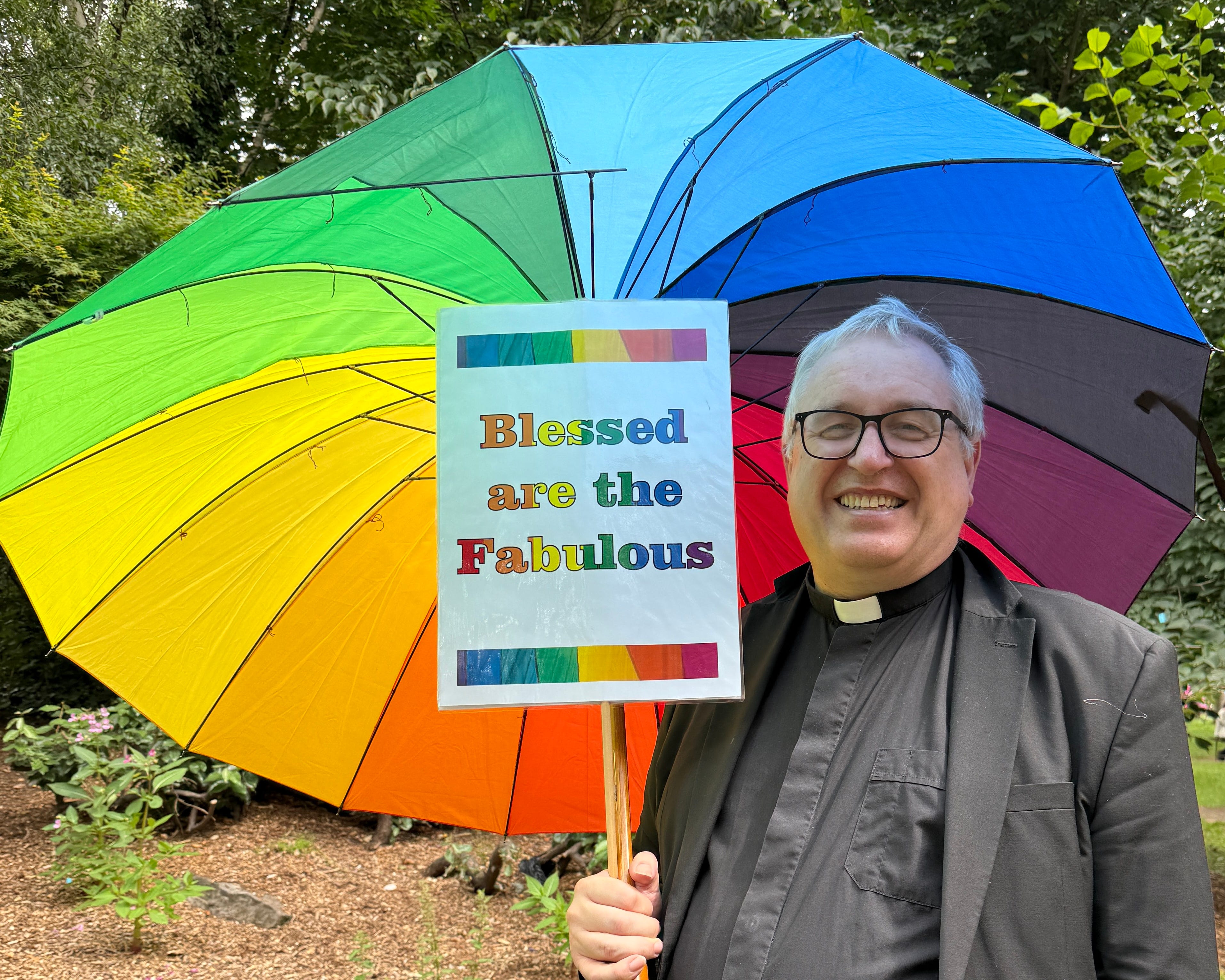
I drifted away from the counter-protest and said hello to Kelvin Holdsworth, who has long been at the forefront of equal rights in the Church. A vicar at a Pride march also provides visual and cultural dissonance.
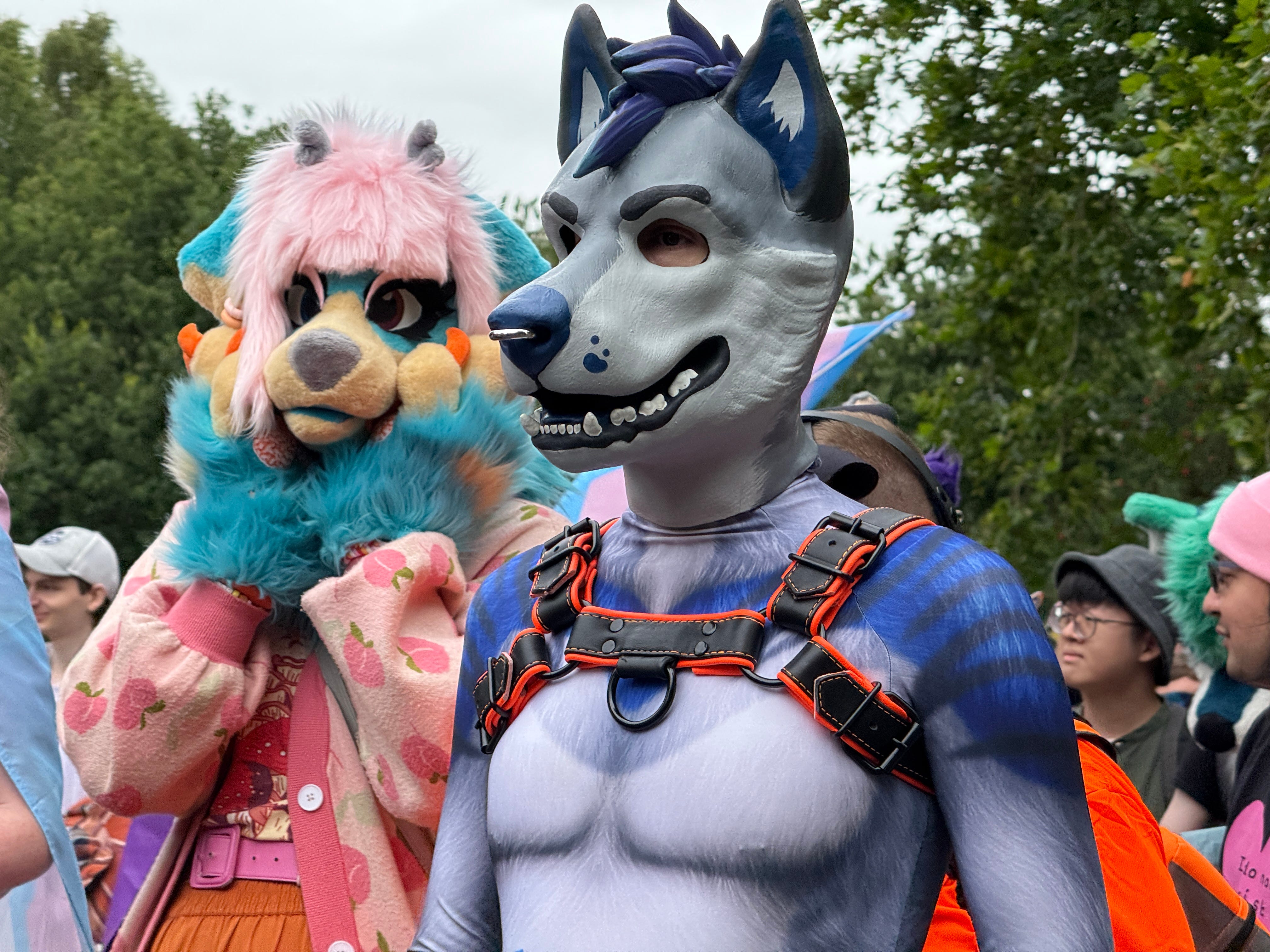
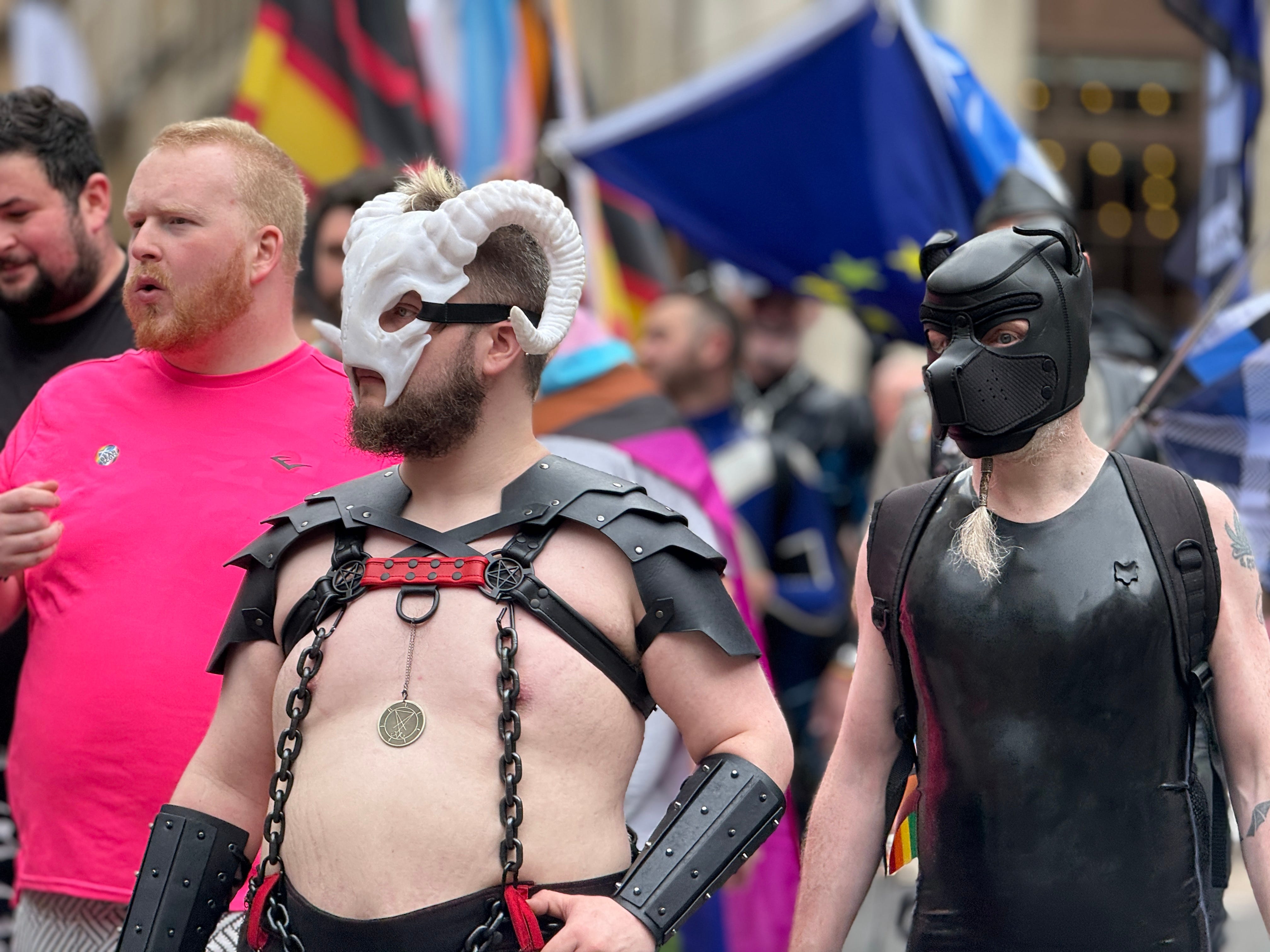
There were thousands of people on the main march, including a group of Furries. I didn’t get the sense that they were in any way controversial, but find the lack of expressiveness of the masks uninteresting photographically.
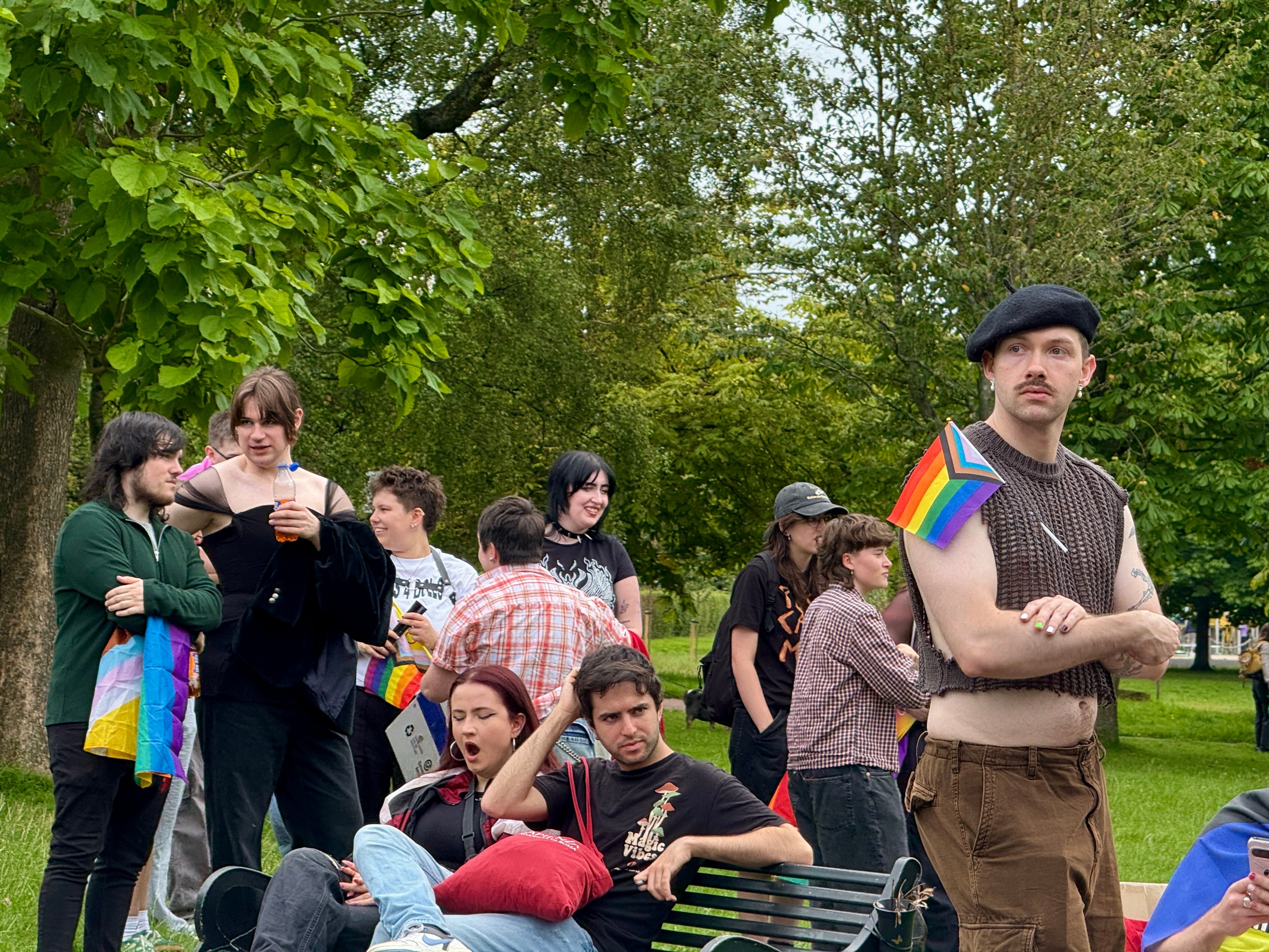
Even seeing people perform for the camera is often less interesting than the quiet moments in between.
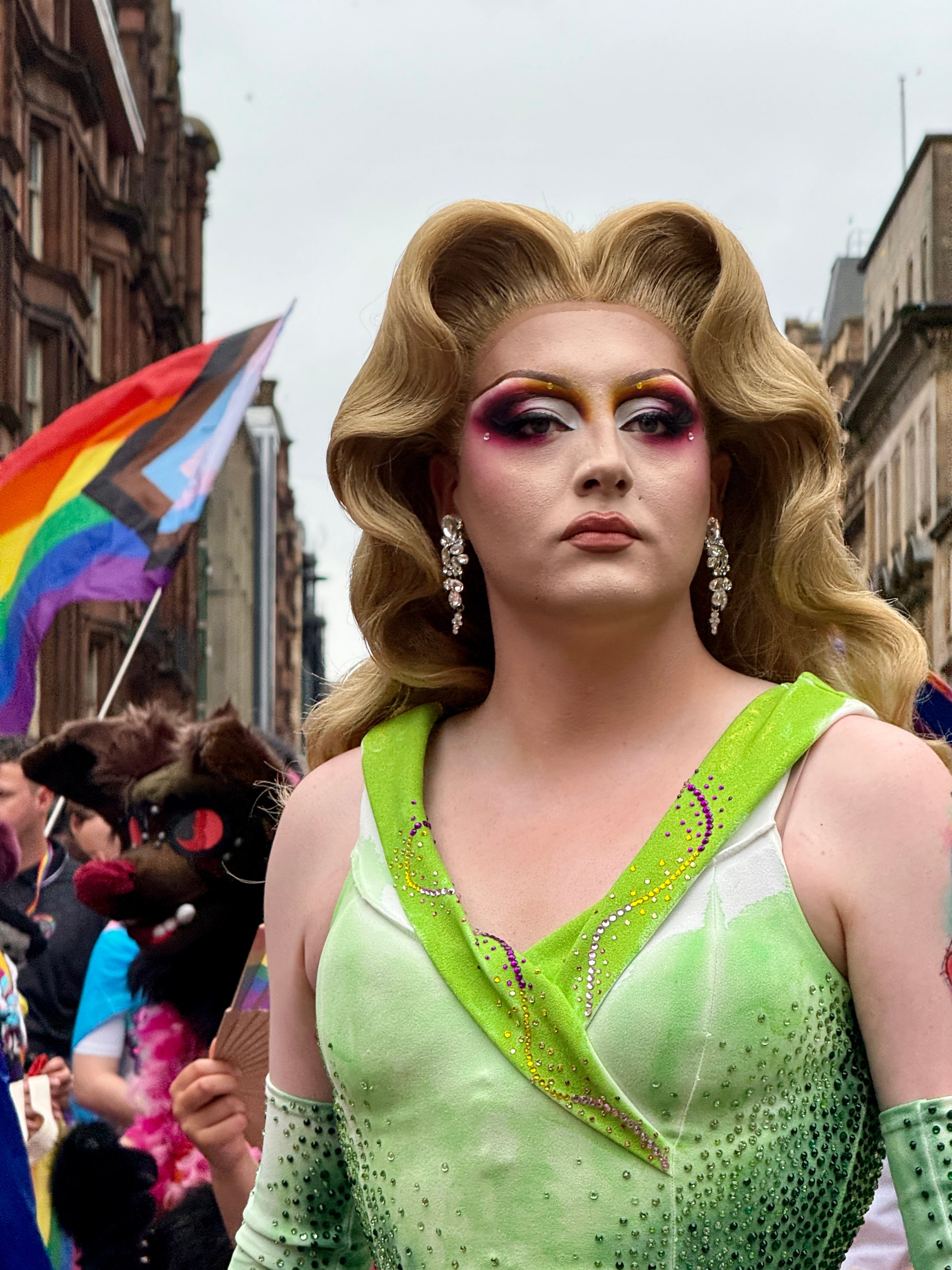
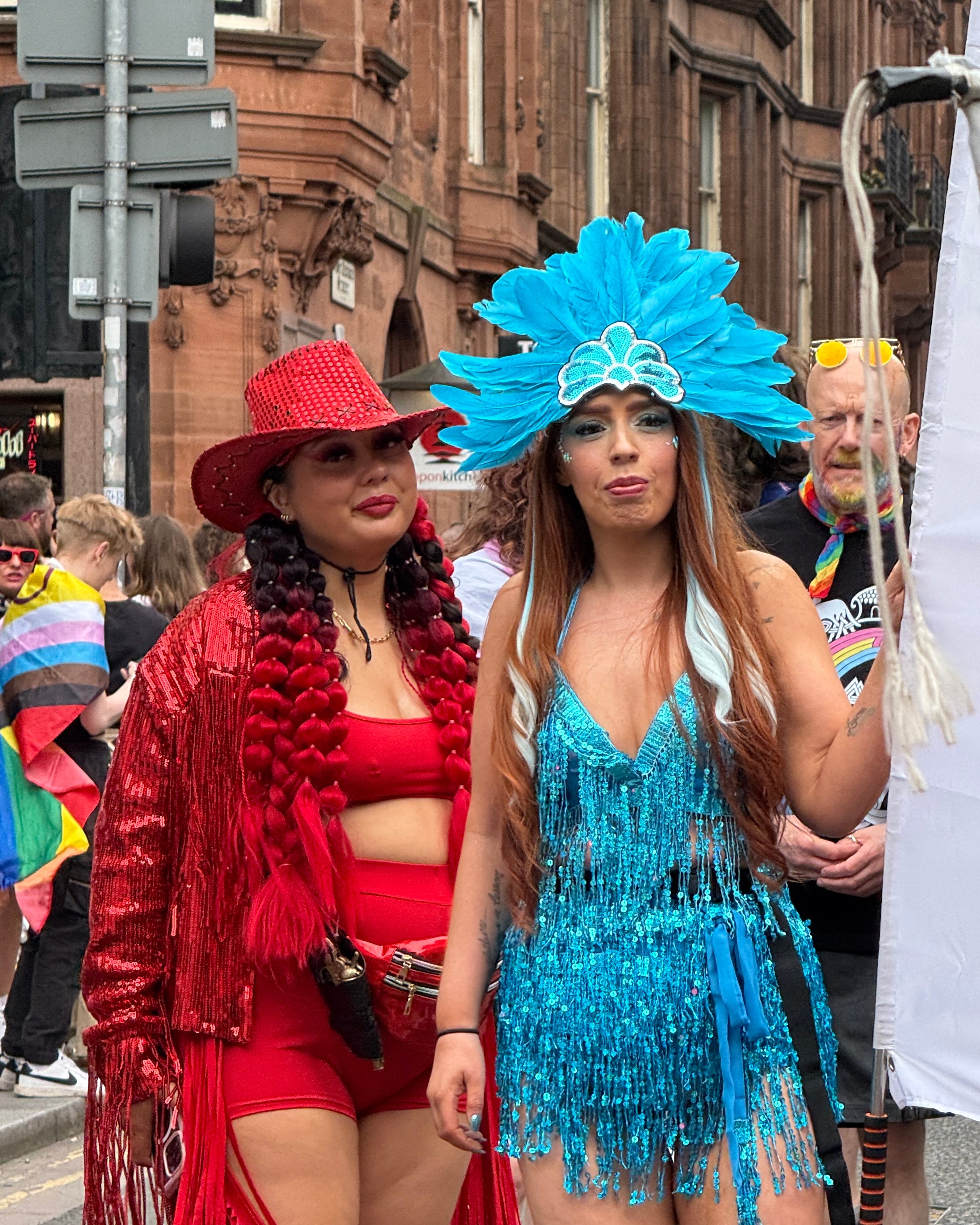
The fact is that no one will look at your activist photo-essay unless it is visually engaging. For instance, I like this picture of a drag queen; they are so statuesque and thoughtful. Something is happening beneath the performance.
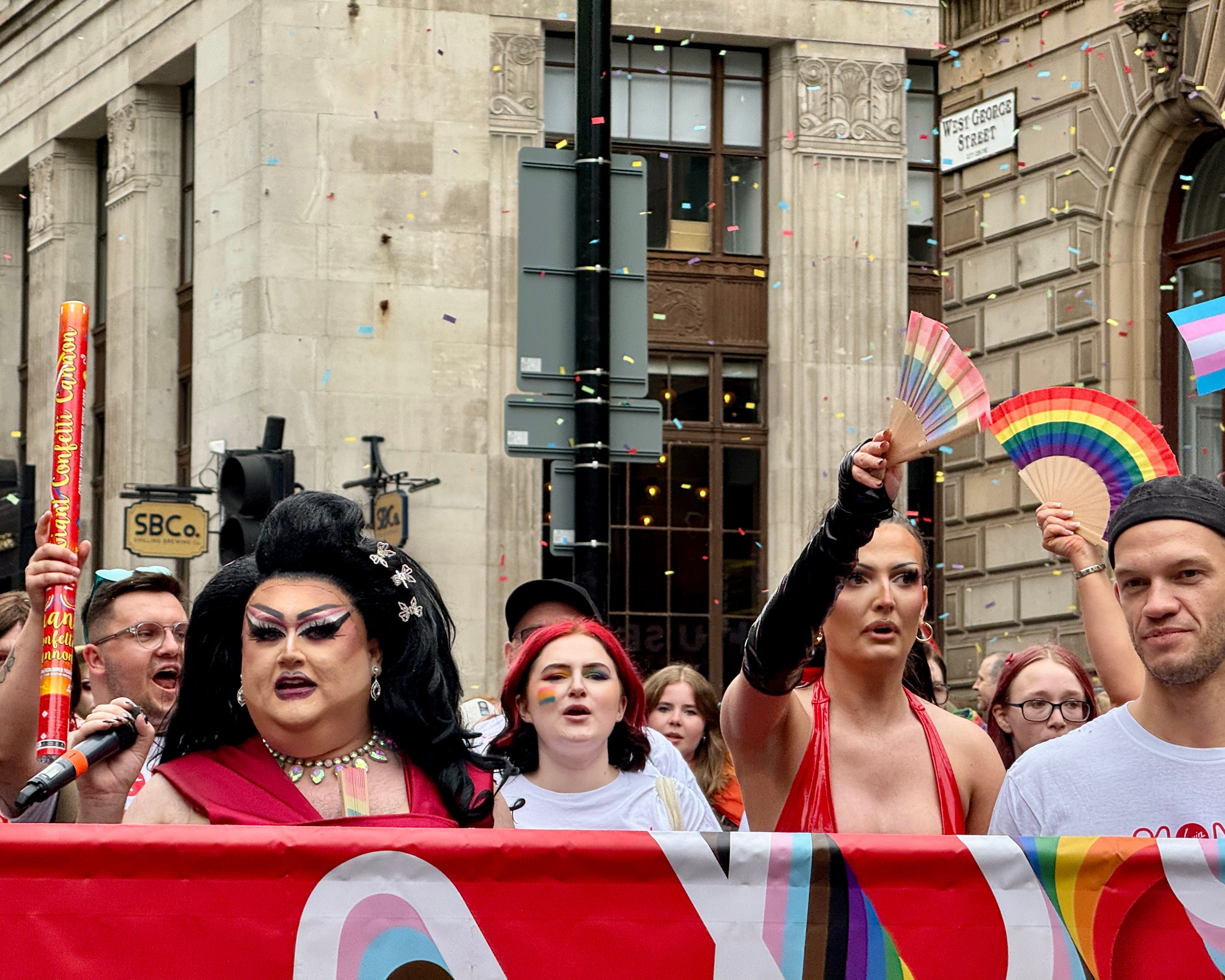
Compare that to this drag queen who was promoting a high street bank every two minutes. I cropped this image to avoid my photo becoming an advert … though perhaps this corporate spectacle also is a potential story. What would W. Eugene Smith do?


In photo-essays like Death-Flow from a Pipe, Smith connects the wider context of Minamata’s toxic pollution with the devastating story of Tomoko and her mother.
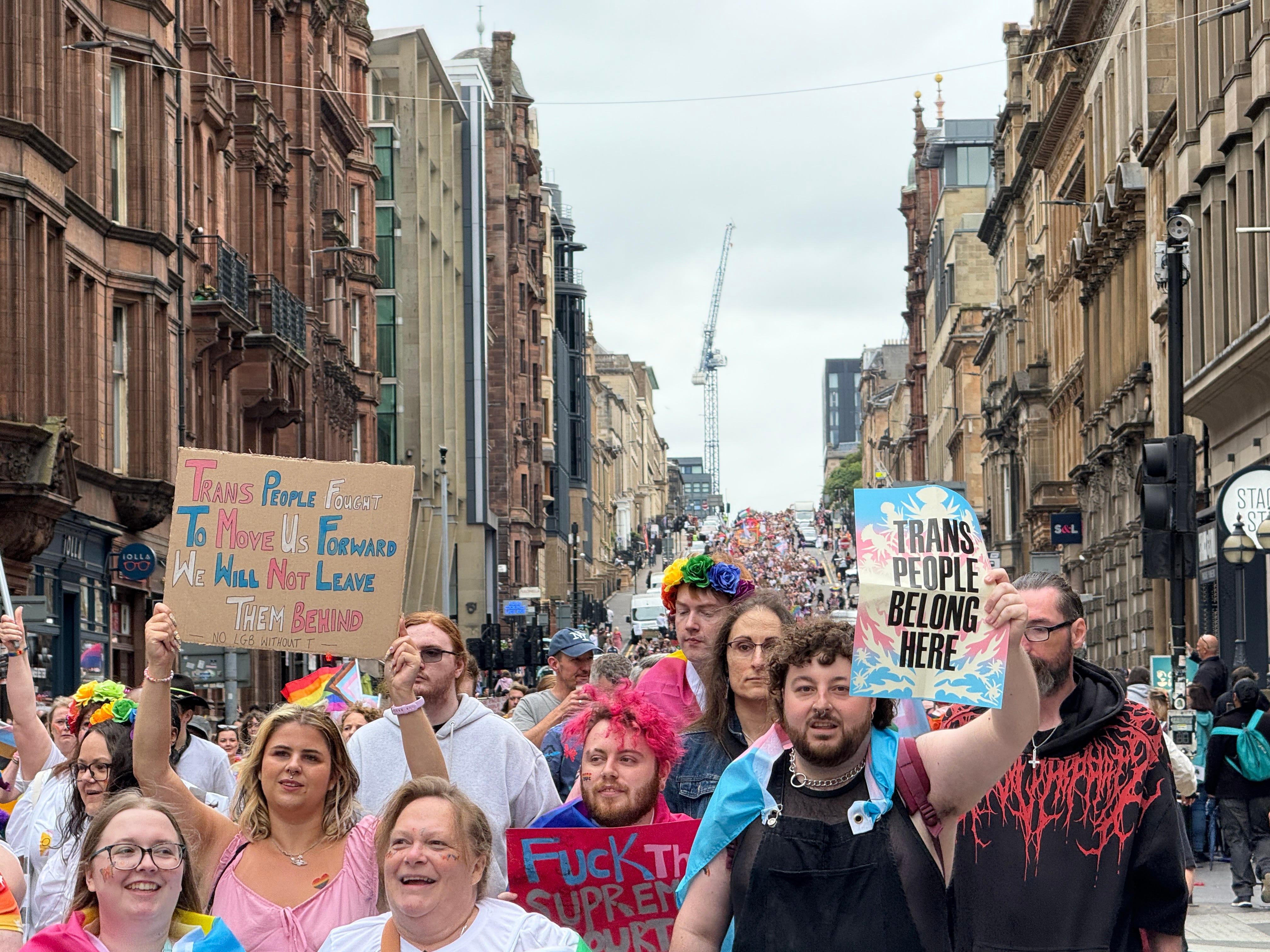
With Pride, it felt like there were too many stories … too many to pick one. The status of trans people in the context of the UK Supreme Court ruling was one of the main points of contention, but there was no anti-trans LGB Alliance presence, as far as I could see, that might create the tension necessary for a story.
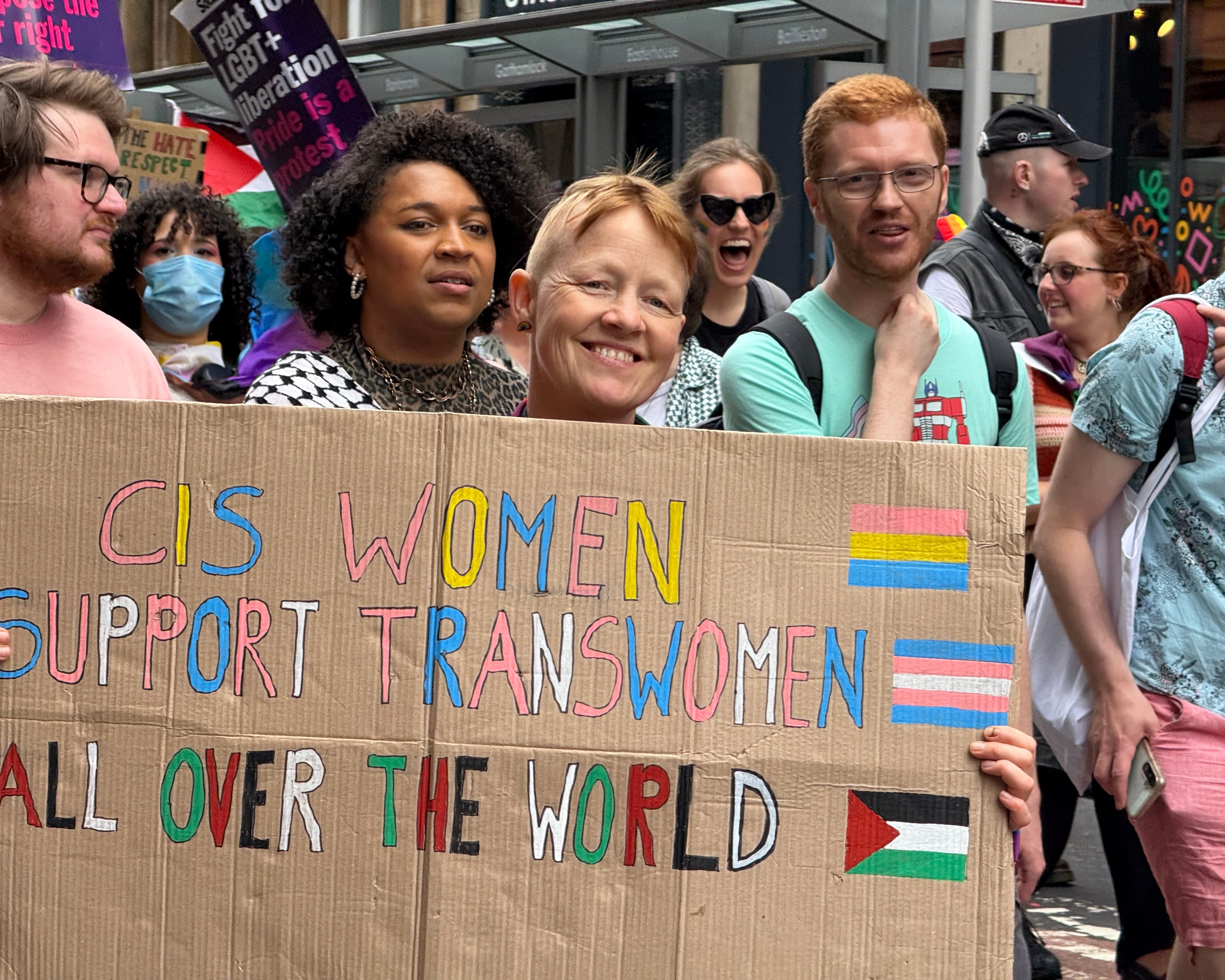
I spotted Ross Greer and Iris Duane together, two Scottish Green politicians who have recently been at the centre of a ‘civil war’ in the party.
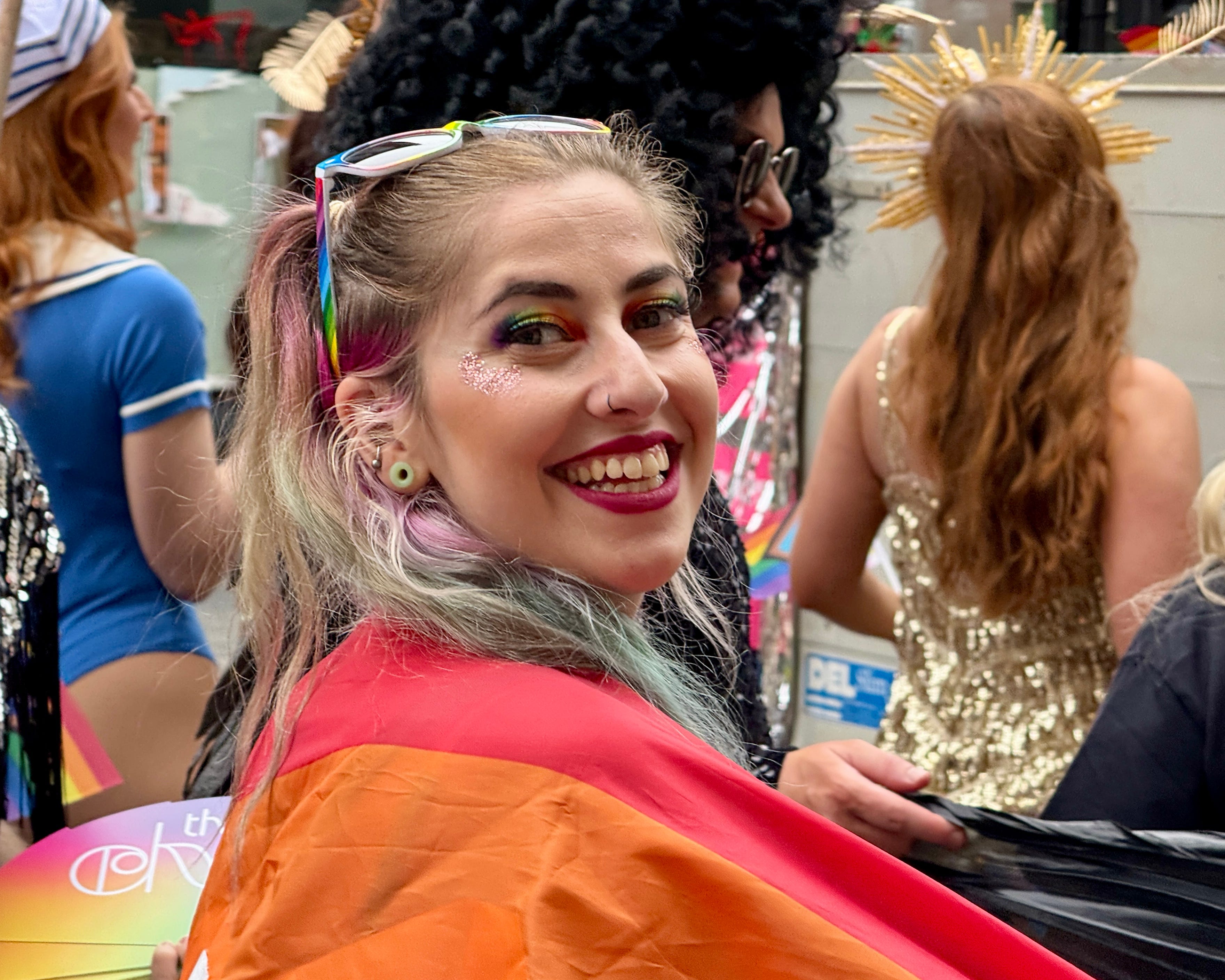
The atmosphere was celebratory and felt more like a party than a protest. I understand why newspapers tend to focus on smiling faces …
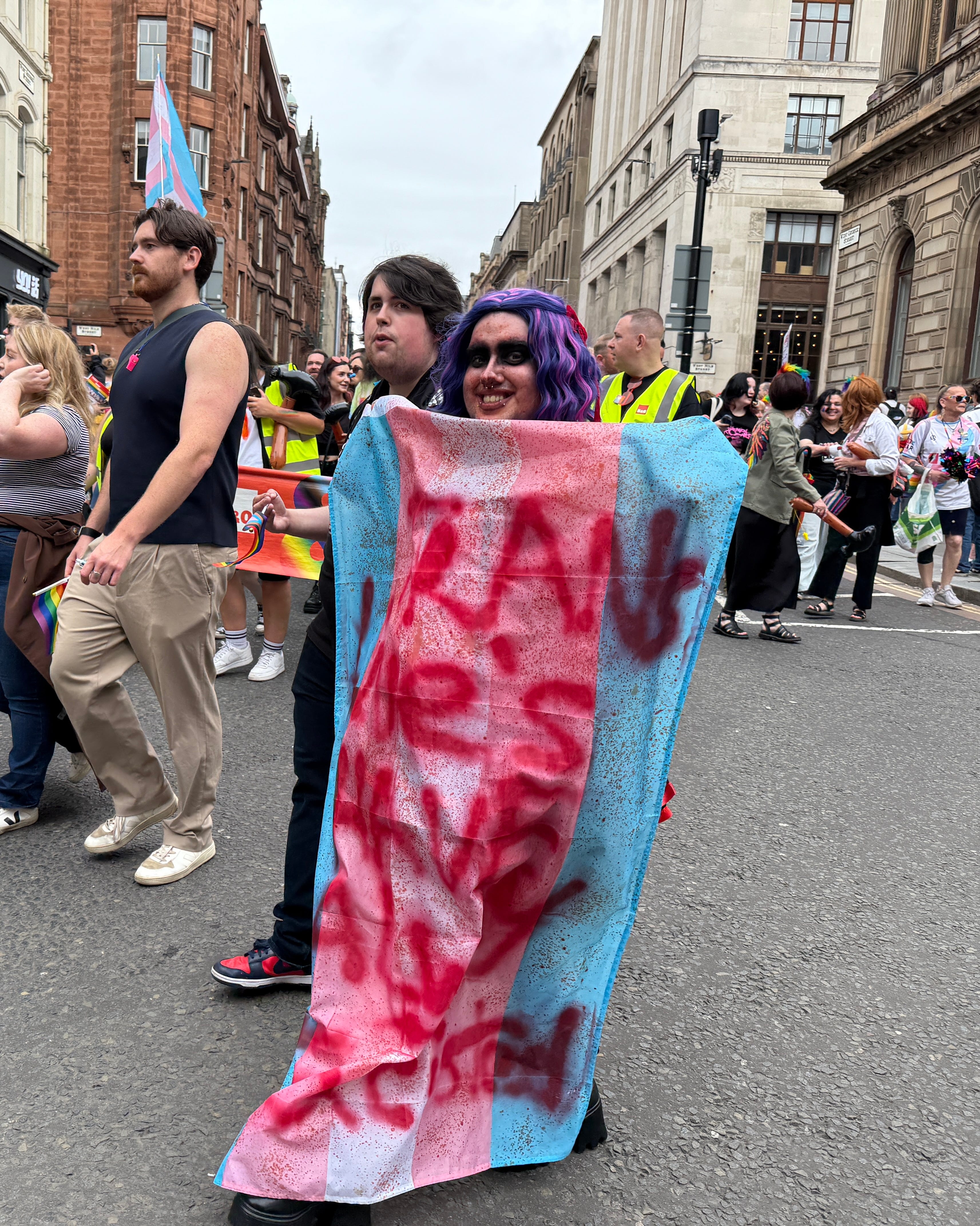
… rather than blood-spattered flags.
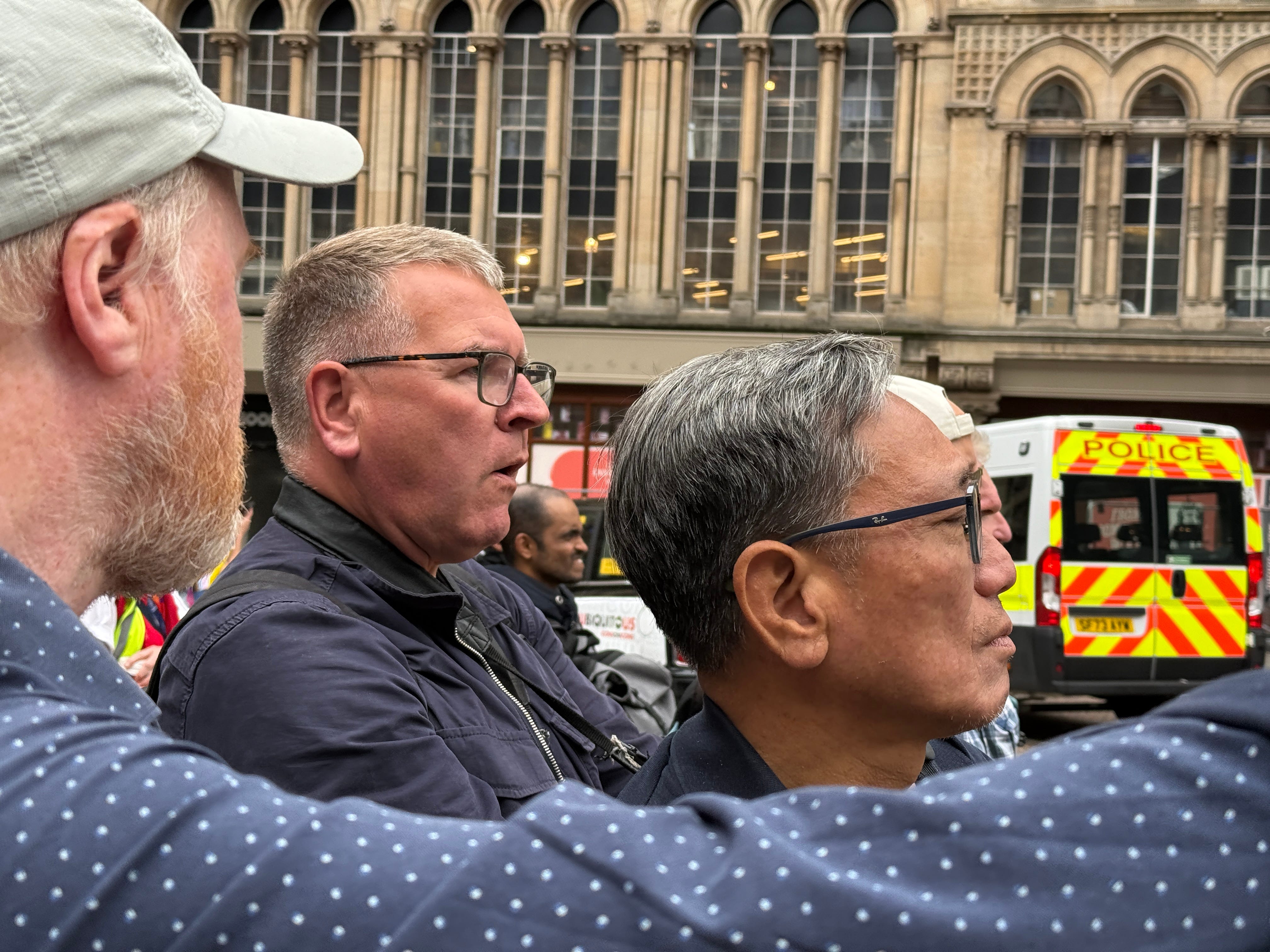
I was thrilled to see the press pack. Robert Perry, Tom Farmer, and Wattie Cheung are all professional photojournalists who spend their days capturing celebrities and politicians. They were looking for the iconic Pride shot to take back to their editors.
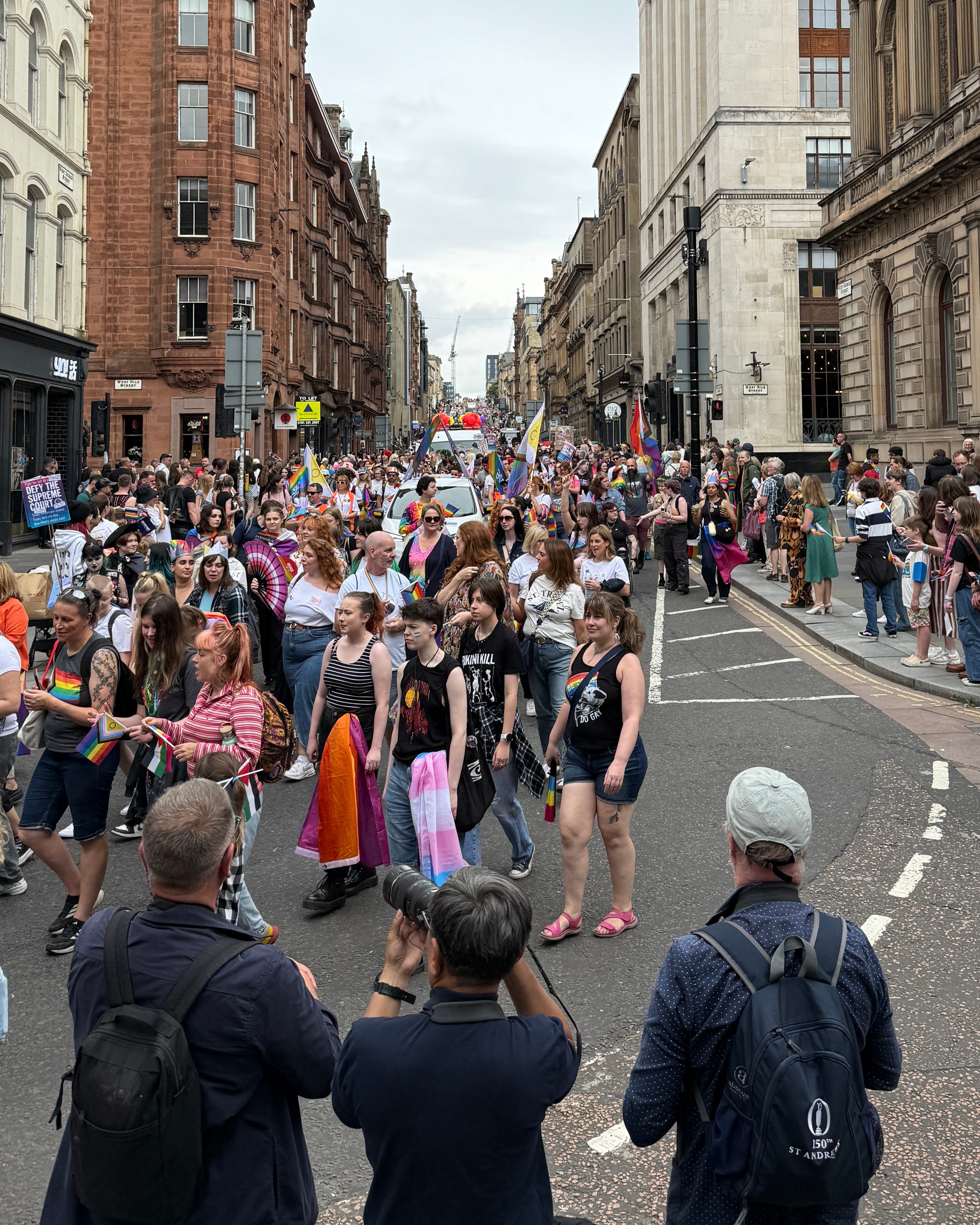
We were standing at the bottom of West George Street, a long, straight, uphill road that helps give a sense of the scale of the march.
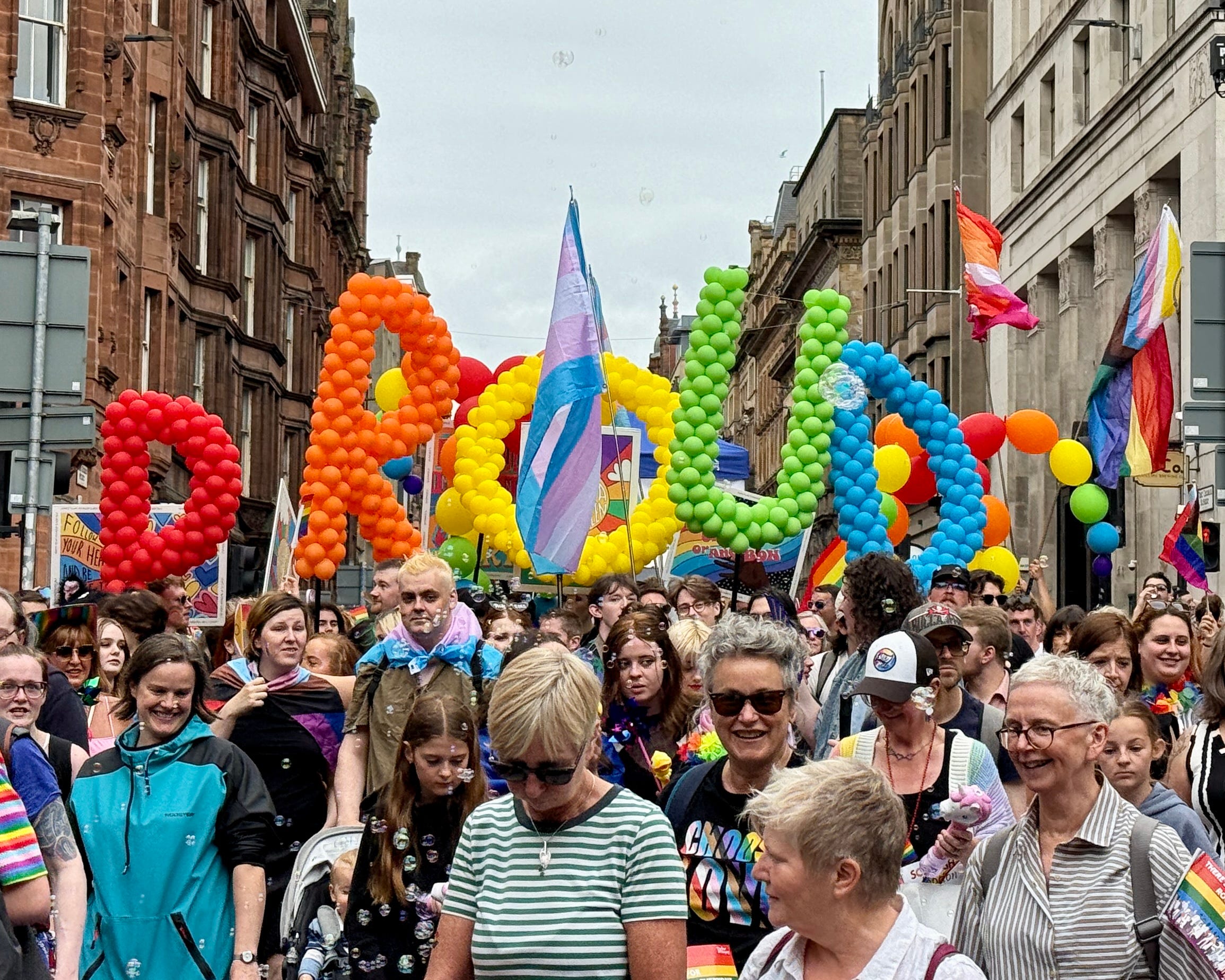
It was tricky to get an angle that included the whole …
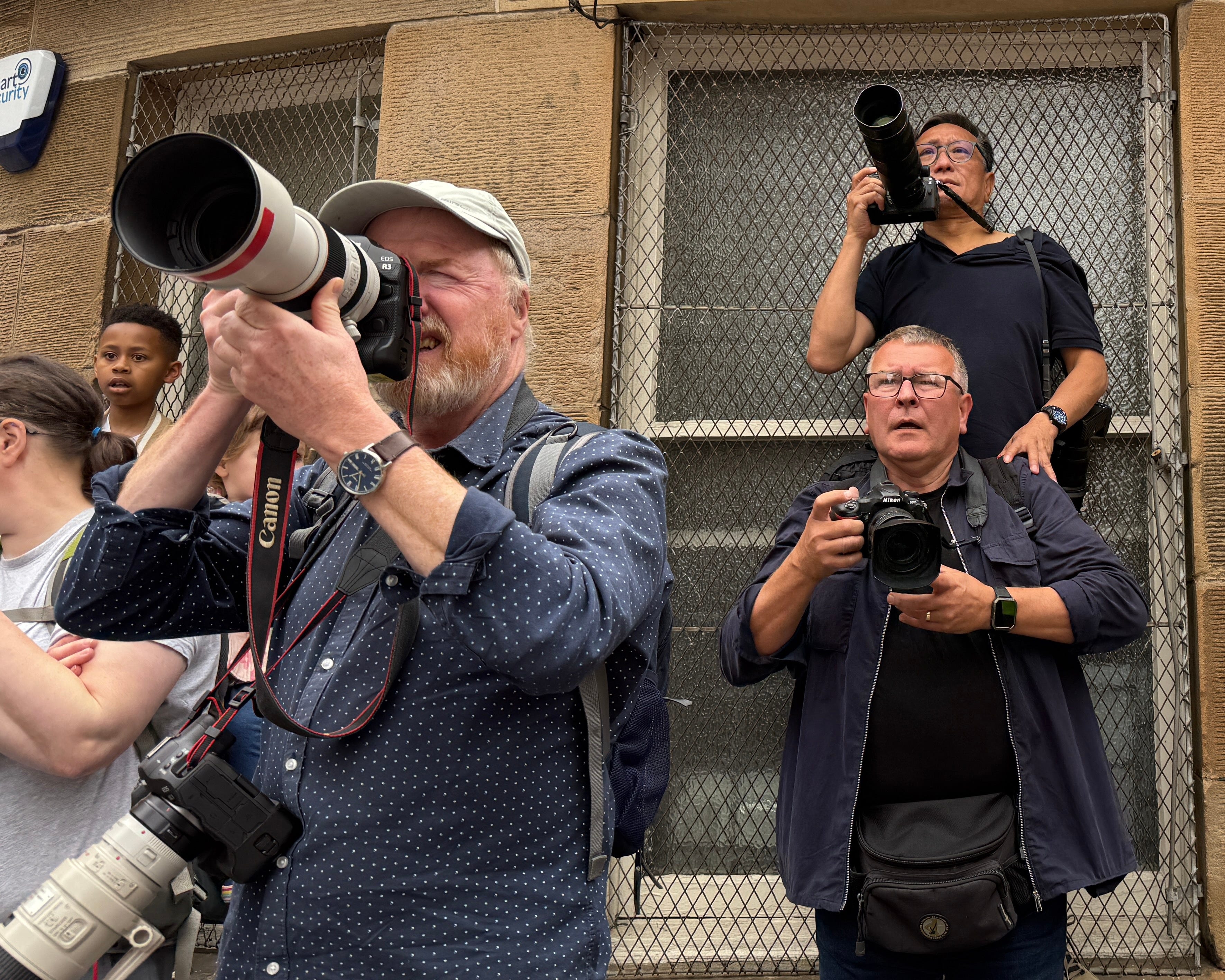
… however, I suggested helping each other onto a nearby window ledge, so they could take it in turns to get a view of the march.
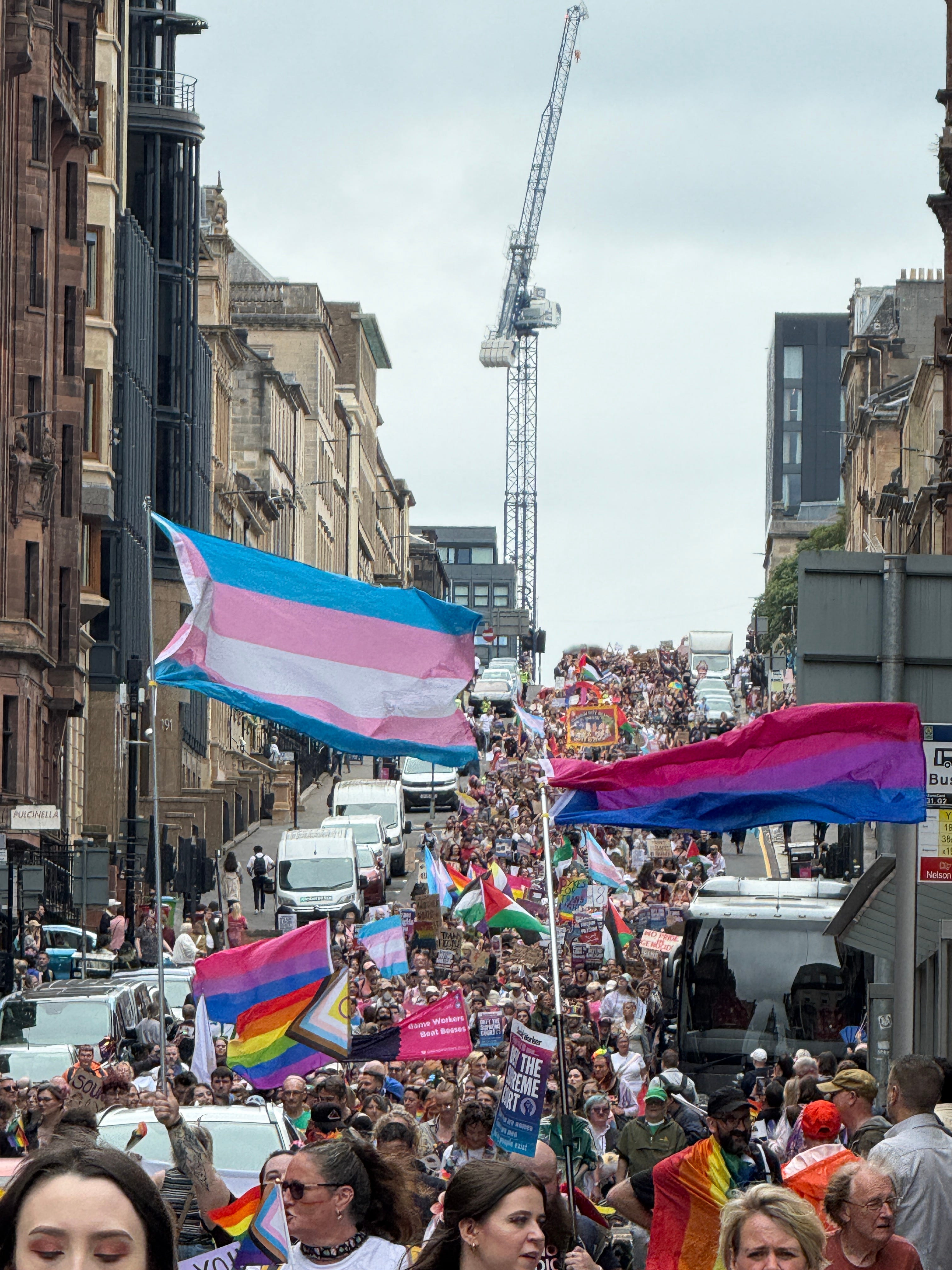
Reviewing the final photos, both The Herald (Robert Perry) and Glasgow Live (Craig McConnell) tended to focus on individuals rather than groups.
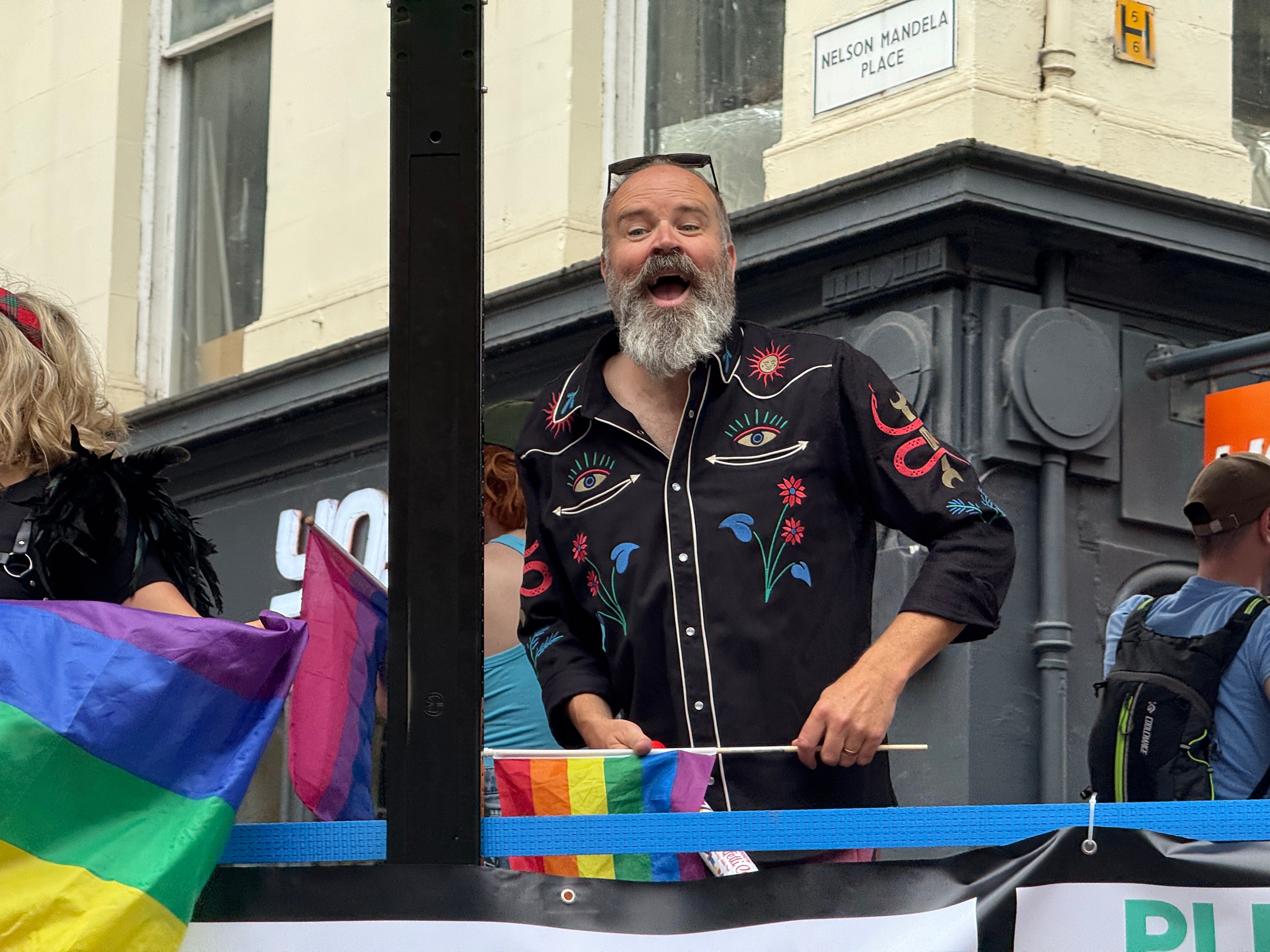
The press photographers seemed to know this guy, so I dutifully followed their lead and took a photo of him, especially when they got him to pose.
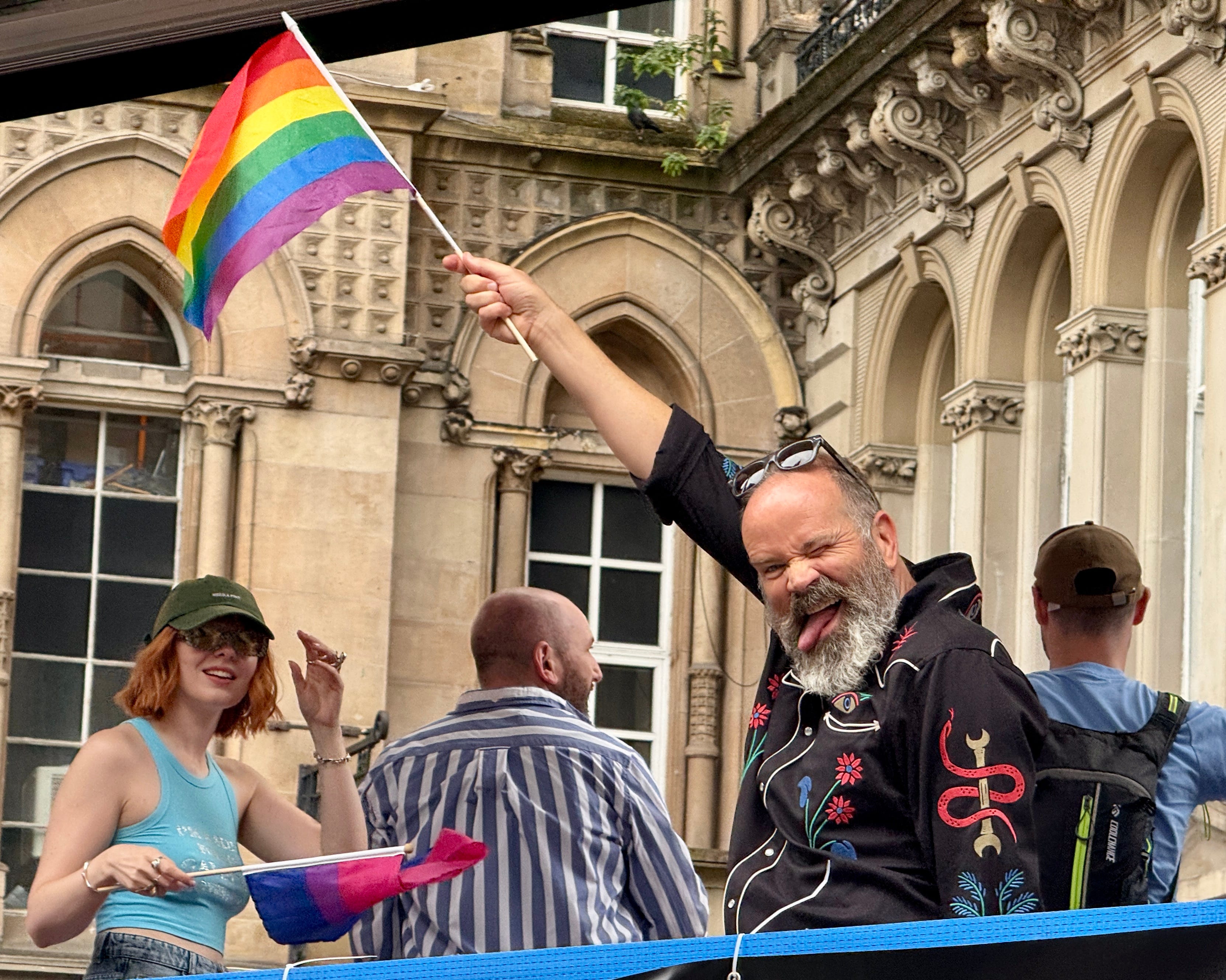
I later discovered that it was Greg Hemphill, star of Still Game and Chewin’ the Fat, and one of Scotland’s best-known comedy performers (if you happen to watch TV). Sadly, the Daily Record preferred to use a screenshot of someone’s TikTok rather than pay a photographer for their work. It’s a hard time for photojournalists.
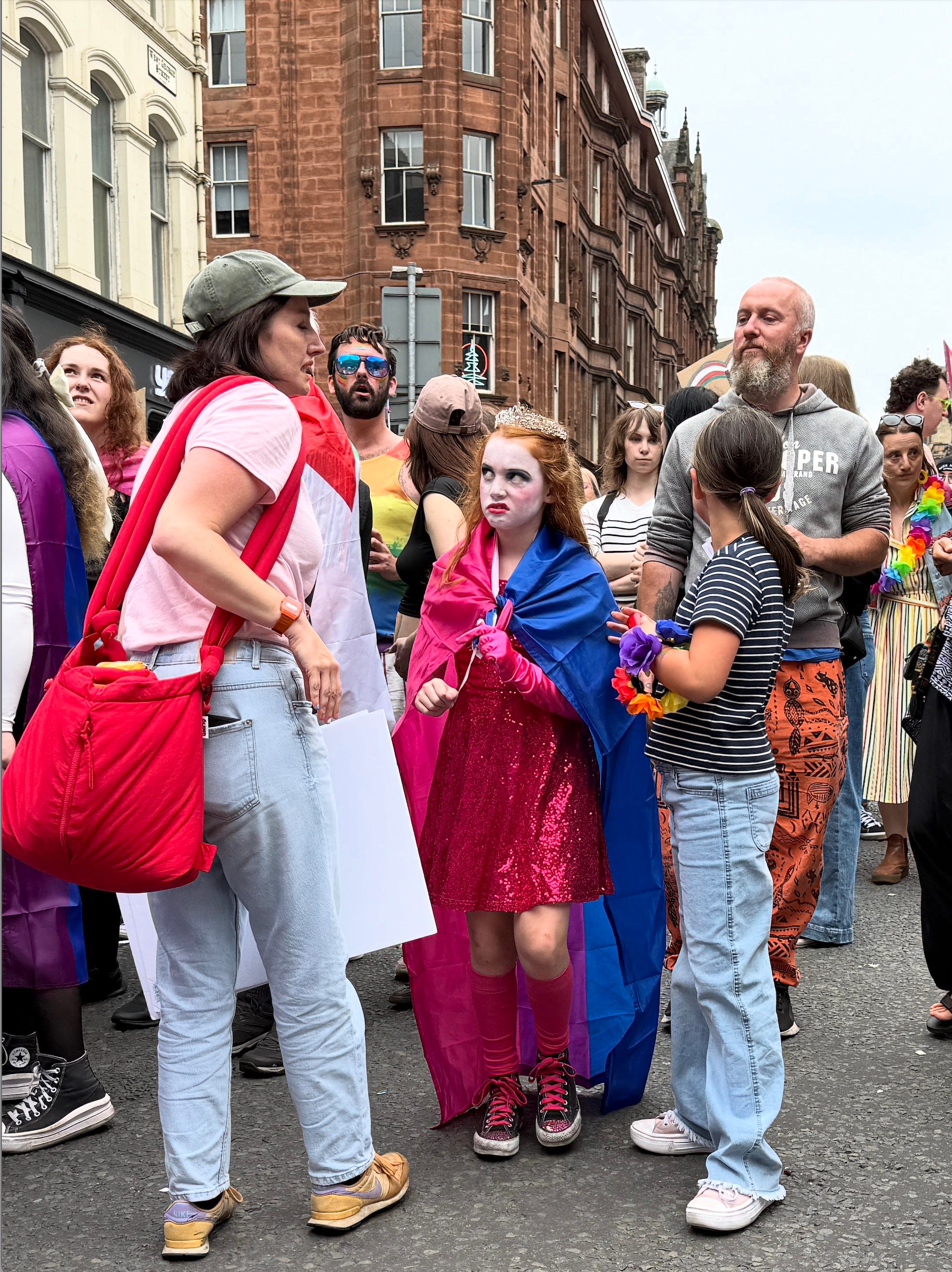
And without an inflammatory celebrity scandal to drive clicks, all we have is the all-too-human desire to look at interesting people.
Great coverage Scott!
Great story and colorful images.
(Your post ended up in my spam folder, so glad I check there periodically…)