


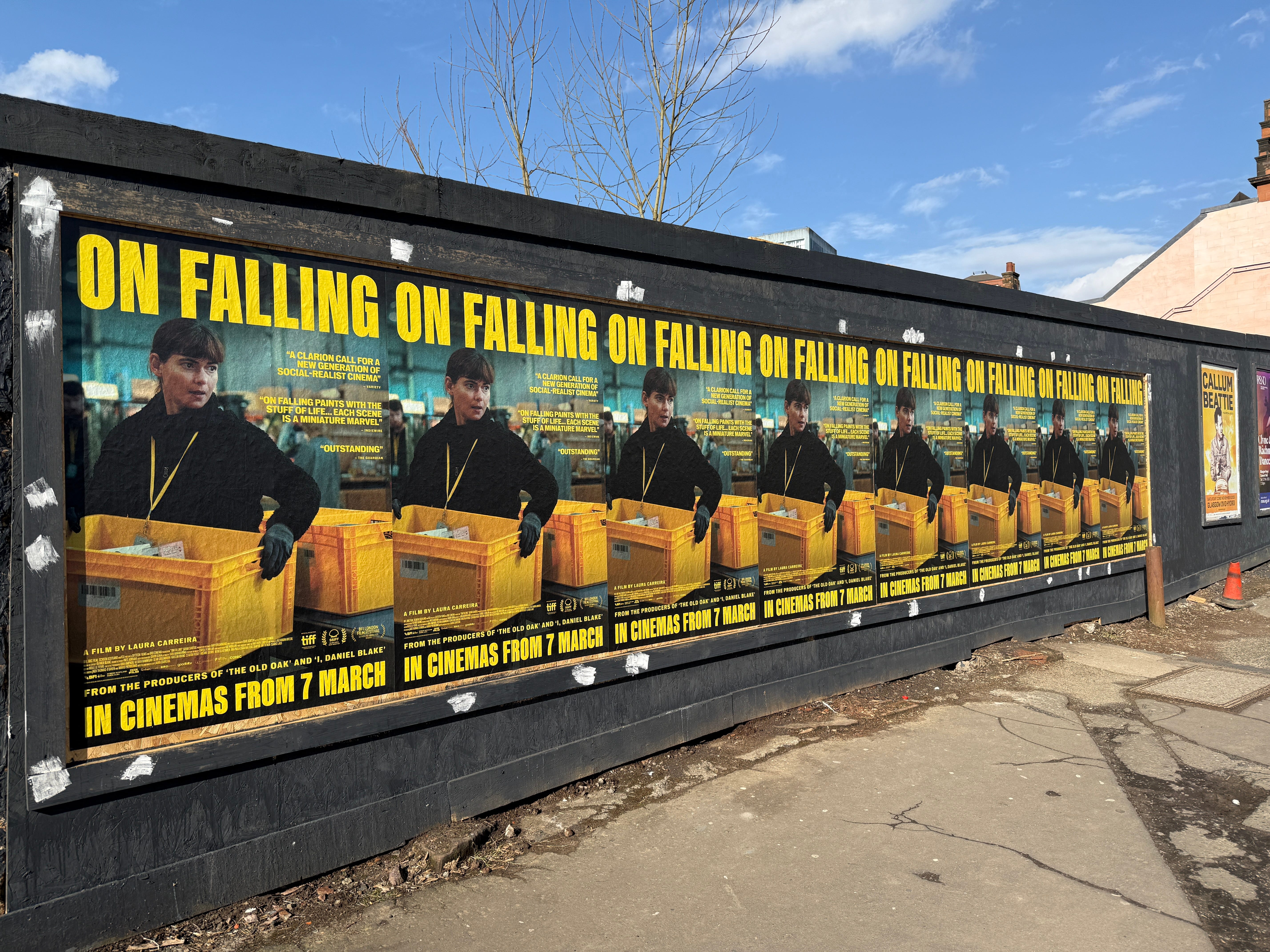
Back in February 2025, I was commissioned by The Bell to interview Laura Carreira and write about her debut, On Falling, a film about the alienating effects of working in an Amazon-style warehouse.
The article turned out well—thanks to the astute editorial suggestions of Moya Lothian-McLean and Selim Bulut—but much of our conversation was left on the cutting-room floor.
Since then, On Falling was awarded Best Feature Film by BAFTA Scotland, and Carreira was named the ‘Hottest’ person in Scottish culture by The List magazine.
Here is an edited transcript of my press junket Zoom interview.
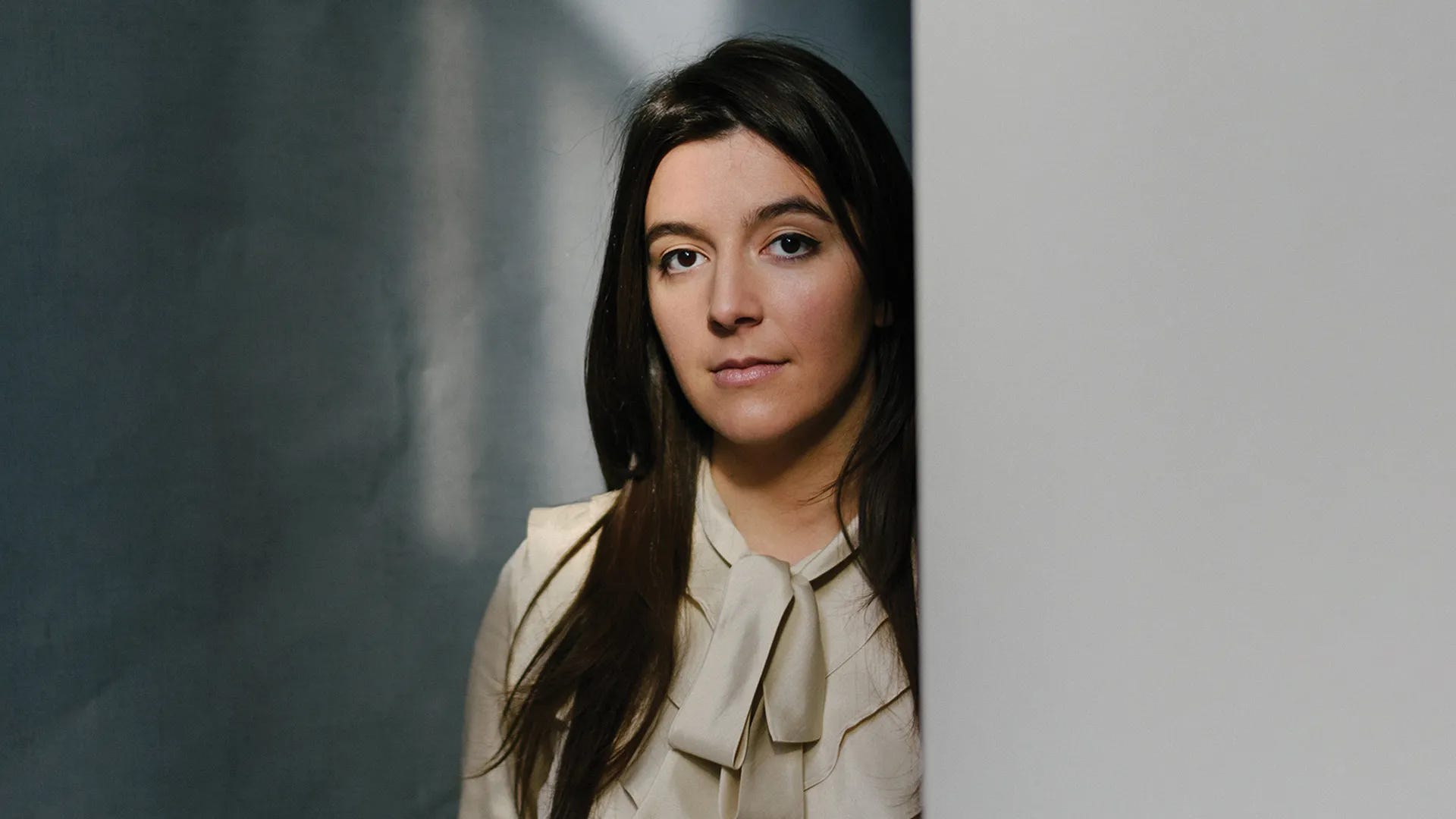
Neil Scott: Hello. Where are you?
Laura Carreira: In Glasgow … on Wellington Street, I think. I can’t see much out of the window.
I mention the location because On Falling is largely shot in and around Glasgow, right?
Yes, a lot of the crew was based in Glasgow, so it made sense for us to establish our base in Glasgow. A lot of the interiors we shot in Glasgow and the warehouses were throughout the Central Belt.
But the protagonist, Aurora (Joana Santos), lives in Edinburgh …
I decided to shoot the exteriors in Edinburgh because I felt like Edinburgh was the place she would be. I guess that was from my own experience. (I moved to Edinburgh 12 years ago.) The only time I lived in Glasgow was during the making of the film.
And, of course, because so much of the film is about her separation from the city, we don’t really know which city it is, because we only see her travelling to work at night.
I was wondering if you see any differences between Glasgow and Edinburgh? Do you know that line about how you have more fun at a Glasgow funeral than you do at an Edinburgh wedding?
I never heard that. I know people from Glasgow, and I think they’re very funny, but I know people from Edinburgh, and they’re also very funny. From an outsider’s perspective, I don’t see the differences as much.
In Portugal, we have a similar thing with Lisbon and Porto. I was born in Porto, but spent my teen years in Lisbon. I like both cities, and I think it’s the same with Edinburgh and Glasgow.
Everyone in the film seems to be joylessly scrolling on the phone. What do you think about this type of alienation beyond the alienation the protagonist gets from working in an Amazon-style warehouse?
A big part of the film was showing phone usage as a symptom of something else. I tried not to point the finger at Aurora and blame her for phone usage, but it shows a longing for something. The phone, to Aurora, is working as a social support. Whenever she’s alone, she goes back to being on the phone. It is her best friend. And, when it breaks, she’s going to try everything to fix it.
Doomscrolling can be an empty experience, but you do get occasional jolts of pleasure. I just went on your Instagram, and there was someone saying, “On Falling is a social drama masterpiece. Impressive, oppressive.” How do you feel when you get feedback like that?
That’s obviously great. I use mine a lot to promote the film. But it’s definitely a creation. You’re creating your life as you want it to be perceived by others. The sounds from the videos that Aurora is scrolling through were important in understanding what the algorithm thinks are her needs.
During the 1968 student protests in France, they had this graffiti, “Underneath the paving stones, the beach!” It was this idea that, below our boring everyday lives, there is potential for liberation. But I feel like today we have the opposite problem: we have all the surface pleasure, and below it is a layer of oppression. How can we achieve liberation now?
In the film, I wanted to look at these topics of work, poverty and self-blame in a different way. There’s a narrative that, if you’re experiencing poverty, it is because of how you spent your money. Or, if you’re experiencing anxiety or depression, you should go for a walk or get therapy. There’s this pressure on the individual to blame themselves for what they’re going through and to find the solutions.
There’s a lot of hope in creating films that are compassionate. That’s my contribution, and I’ll continue contributing to what you call our liberation. There’s enormous potential in how we could live. If the system were to stop, we’d find much better ways of living.
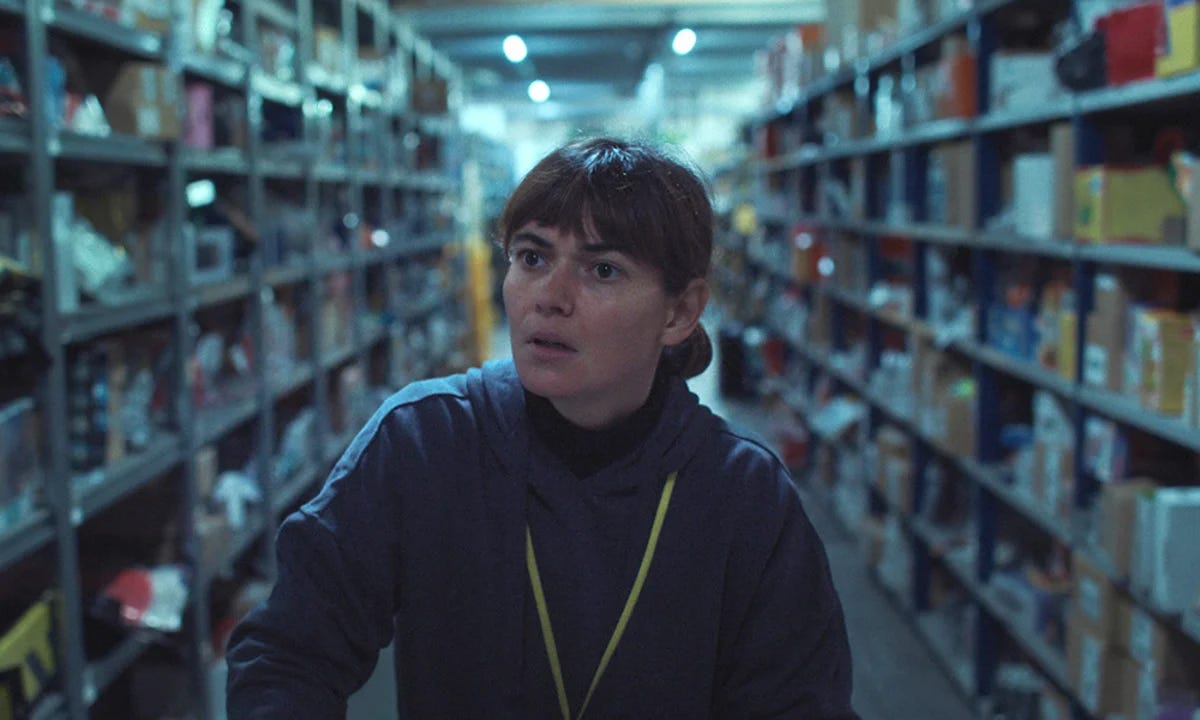
There is a strikingly cold palette to the film. I was wondering if you could speak about your visual approach.
We wanted to show the reality of each space. We were not constructing anything. With the flat, it had to be a beige flat, because all the rented rooms I lived in had this beige colour.
Then, the choices we made were related to the theme of isolation: how can we portray loneliness? What would it look like? For me, the first image was a painting by [Edward] Hopper, of the character alone. And that didn’t feel like the right framing.
So we went the opposite direction and placed the camera much closer to her. That to me felt like the right frame to show loneliness and always keeping almost the same perspective. The camera has the same routines as Aurora and is constantly seeing Aurora in the same way. It’s not very welcoming of others into the frame.
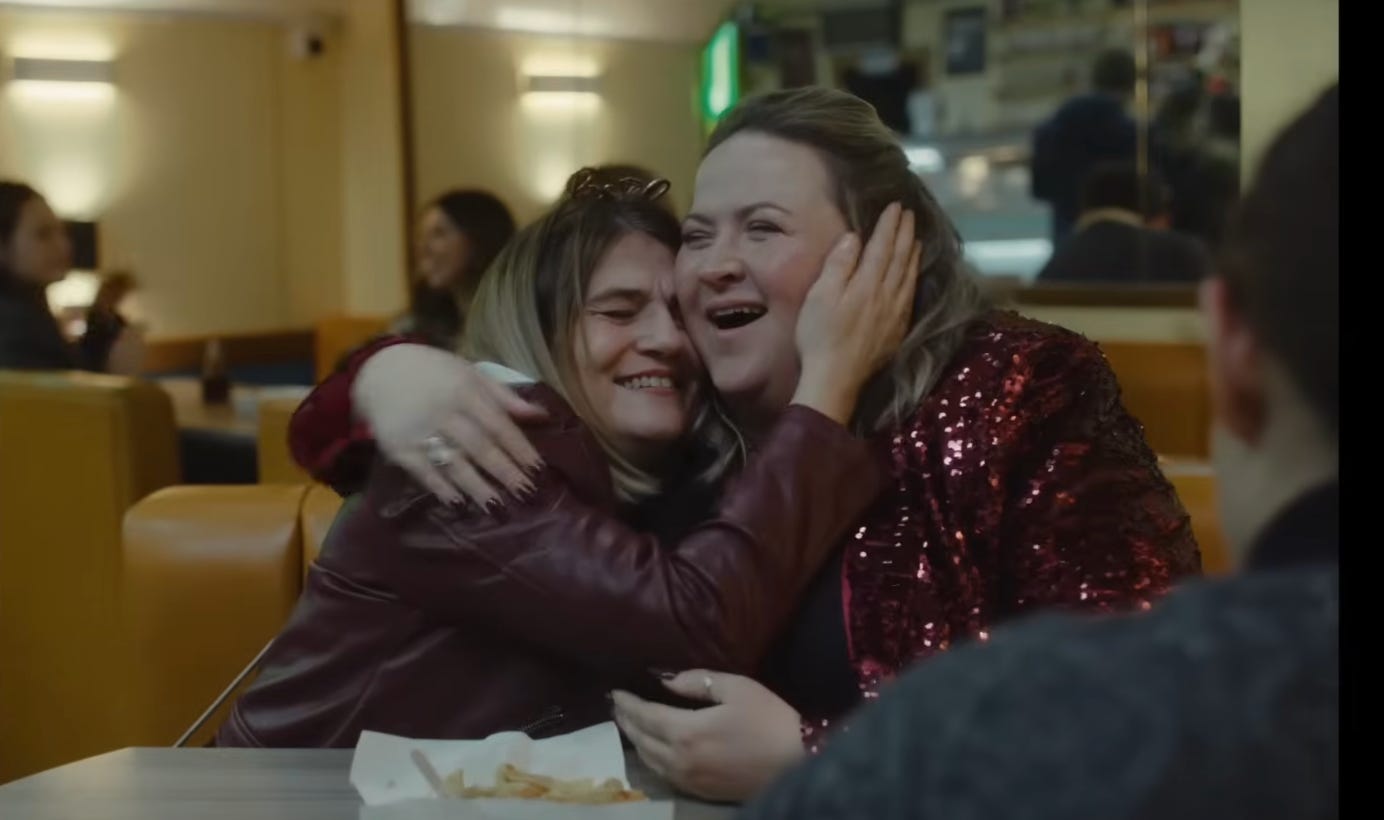
When I saw the fish and chips shop scene, with all the hen parties and drunkenness, it made me curious about cultural differences. One thing I know about Portugal is that they have this untranslatable word ‘saudade’, which means a feeling of loss and longing. I wonder if Aurora’s isolation is a particularly Portuguese alienation?
We’ve been screening the film in many different countries, and the positive way in which people are relating to the film tells me that these feelings of alienation and longing for something else are pretty universal.
It’s a hard one for me because I am Portuguese, but I have lived my entire adult life in Scotland. In five years, I will have lived longer in Scotland than in Portugal. Both countries are home in different ways.
The film feels very relevant and contemporary, but at the same time, there is an element of nostalgia with the flatshare of Polish, Spanish and Portuguese people. It feels slightly pre-Brexit in a way. What did Brexit mean to you?
It was a pretty strange time to be in the UK, as a European migrant, with the anti-European sentiment. At the same time, I remember how kind the Scottish people were to me at that time. They were, if anything, apologising for what was happening.
In my first few years in Scotland, I mainly worked with other migrants and shared flats with other migrants. I remember questioning that, thinking, “Oh, I just seem, I don’t seem to interact with a lot of Scottish people.” That was definitely something that I wanted to bring to the film.
One of the movies I was thinking about when watching On Falling is the greatest film of all time, according to the BFI poll, Jeanne Dielman, 23 quai du Commerce, 1080 Bruxelles. What does that film mean to you?
Watching that film created an impression on me. It shows the day-to-day, mundane details in such a beautiful, microscopic way. It opened doors for filmmakers today to explore themes in a different way, to keep searching for other ways of looking at alienation, which is so often avoided.
The other film I thought about was Nomadland. After she won the Oscar with that, Chloé Zhao went on to make a Marvel superhero film. So, I’m curious, what Marvel superhero film would you like to make next once this film takes off?
It’s not on my plans, if I’m honest. I want to keep making films about work. Films I can stand by. There’s a space for everything. Of course, there are going to be entertaining and escapist films, and I’m glad they exist, but it’s good not to escape all the time.
Thank you, Laura.
On Falling is available in the UK on the BFI player.
Read more about Laura Carreira on her website.