


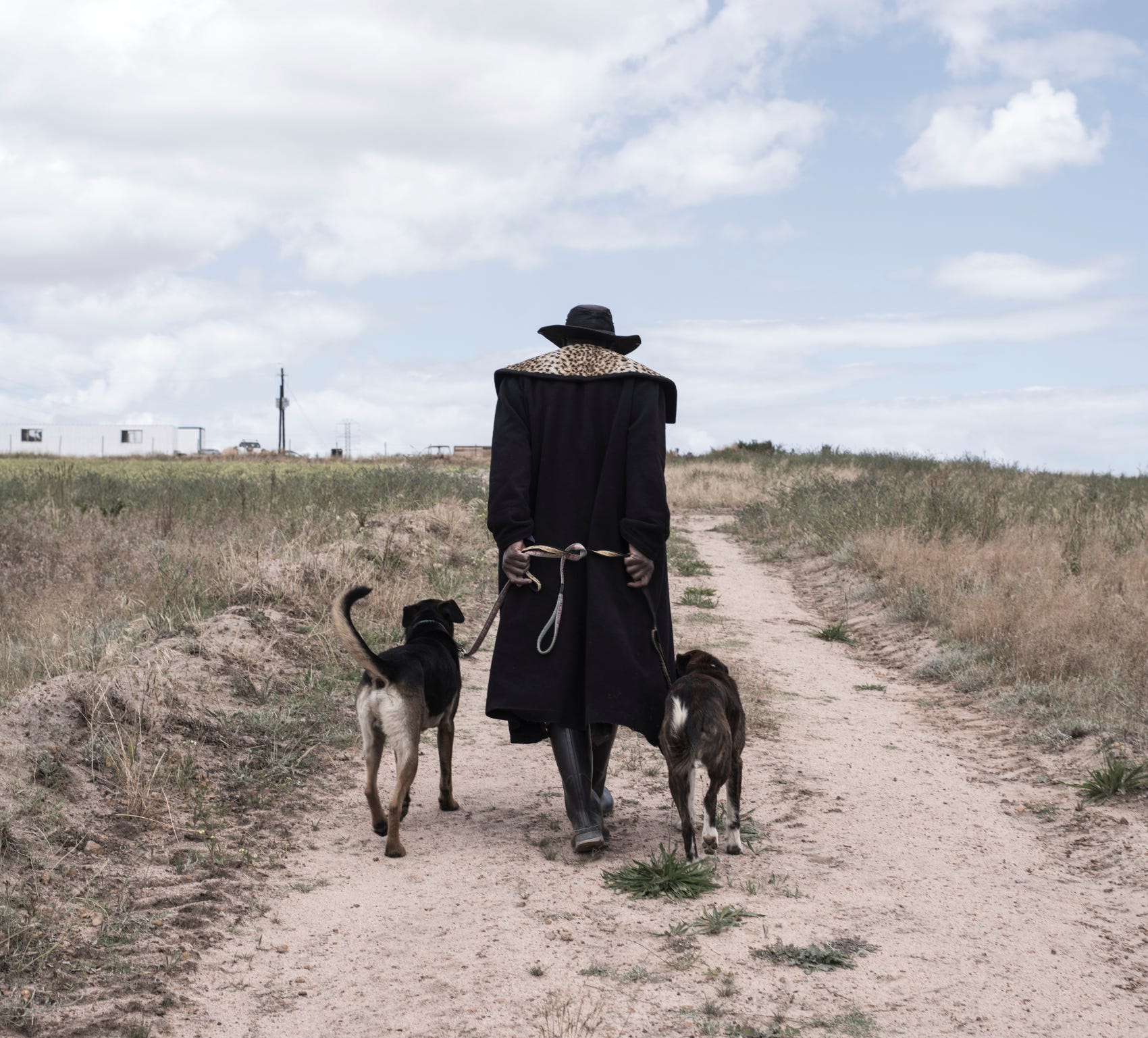
“Life can only be understood backwards; but it must be lived forwards.”
— Søren Kierkegaard.
Born in apartheid South Africa in 1957, Jillian Edelstein originally trained as a social worker, before becoming a press photographer in Johannesburg. She moved to London in the 1980s and built a reputation as one of Britain’s leading portraitists, working for the Sunday Times Magazine, Vanity Fair, Time, and The New Yorker. She has over 100 portraits in the National Portrait Gallery.
One of her defining works, Truth and Lies (2001), documented South Africa’s post-apartheid Truth and Reconciliation Commission. Other assignments have taken her to Palestine, Ukraine, and even Glasgow. She has won numerous prizes for photography and has more recently been making films, including The Water Rats (2022) about a community of wild swimmers.
Neil Scott: Looking through your portfolio, it feels like a life lived forwards. There is such a variety of work. Has the new exhibition at Stills in Edinburgh been an opportunity to make sense of your career?
Jillian Edelstein: It’s not a retrospective. The word retrospective made me feel like I was about to step into my hidey-hole. But then the curator Tracy Marshall-Grant came up with the word ‘survey’, which is a teeny representation of some of the projects.
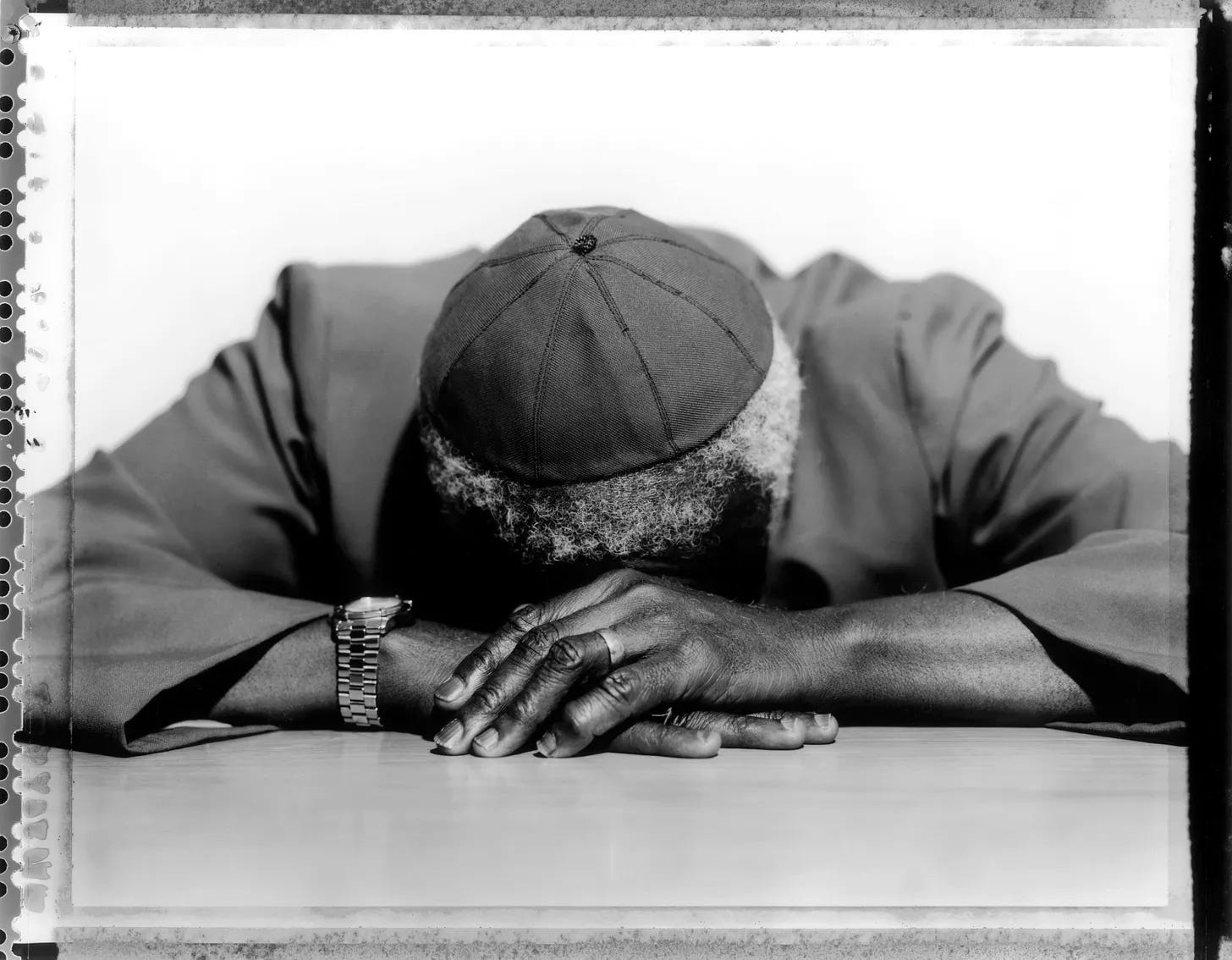
The poster for the exhibition shows Archbishop Desmond Tutu, the man who set up the Truth and Reconciliation Commission in South Africa as a way to heal the wounds of apartheid. Why do you think that period — and your project — is so resonant?
It has had a resurgence because of Palestine and what’s been going on in the West Bank and in Gaza. Nelson Mandela was very outspoken about human rights and his message of reconciliation and dialogue — considering he’d been in prison for 27 years — still stands for so much. We need to revisit it as often as we can.
What do you think of South Africa now?
I haven’t lived there for a very long time, and haven’t visited for the past two years. When I hear stories of the xenophobia, the protests and attacks, when I hear about the clear corruption, I imagine that Mandela, in terms of his legacy, might be looking down and frowning.
Whenever I’ve met celebrities, I sometimes get a sense of aura from them. I’m never quite sure if it’s something I project onto them or if it emanates from within. What do you think?
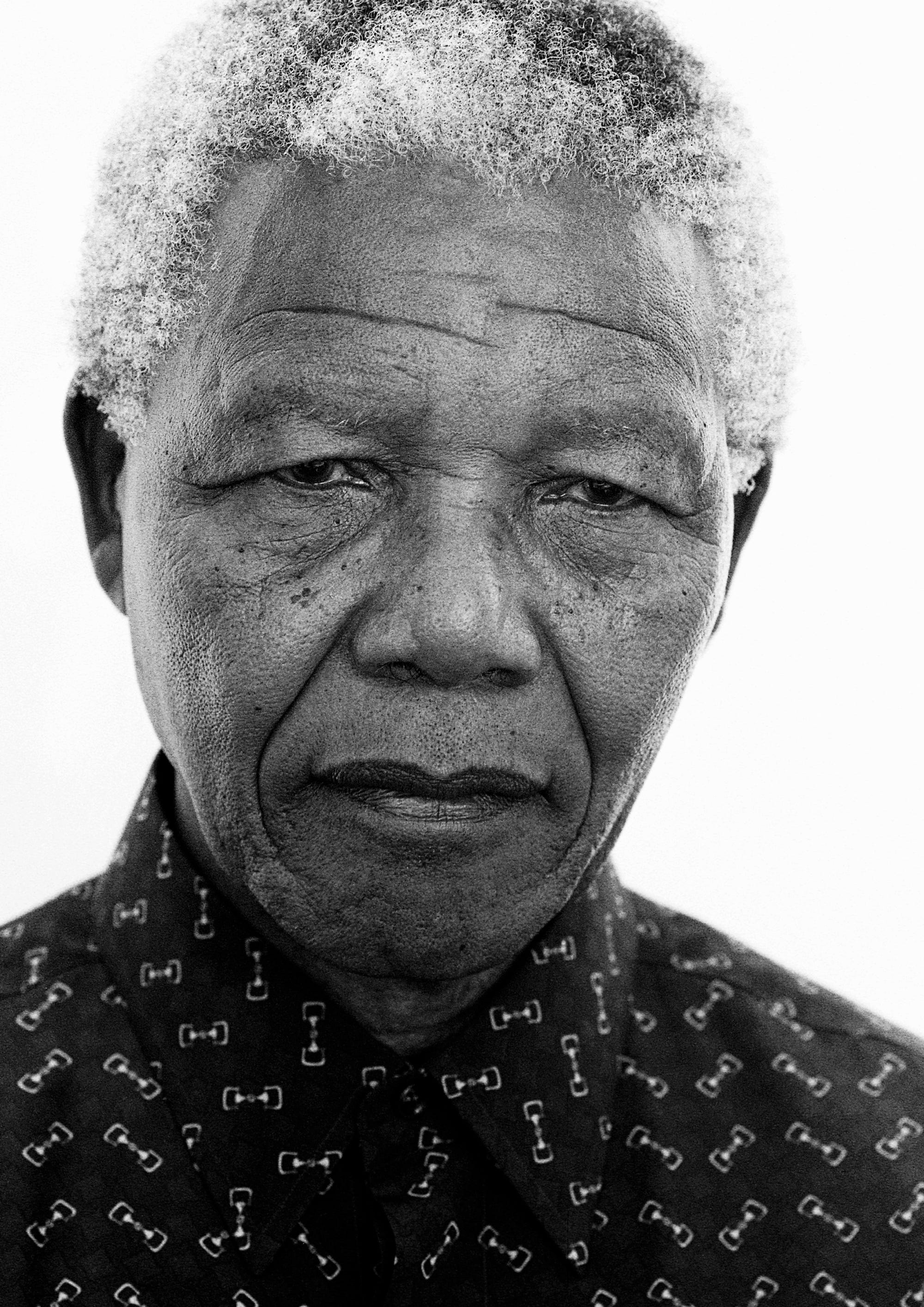
The one time I experienced it was with Nelson Mandela. It’s very hard to describe without sounding twee or kitsch, but when I shook Mandela’s hand, there was this very powerful, internal, physical response, which I’d never had before and have never had since. A smile came onto my face as I met him and I couldn’t wipe it off.
The portrait you chose of him is reflective and has weight. But what else is on that Nelson Mandela contact sheet?
I decided to go close on his hands. I decided to go close on his shirt. There was that whole thing of him wearing these extraordinary shirts. They said you’ve got ten minutes and no lighting ... because his eyes had been damaged in the limestone quarries. So there’s the close-up of the hands, there’s the shirt, there’s one of him smiling, and one or two of him looking away — mainly three-quarter shots. But there’s that one reflective image, and that’s the one. I knew what was going on in his life at that time, so it felt like that was the image.
What do you think makes for a great portrait photographer?
It’s a number of things. Honesty of representation ... and creativity of representation. It’s a mixture of the technique, the gaze, and understanding.
It’s a collaborative dance because you have to put on some sort of a performance in order to put yourself across as a way of enticing somebody to put themselves across. It’s the dance of human communication and dialogue.
When somebody is resistant, you can feel that. It’s about whether you’re going to fight it or you’re going to embrace it, notice it, and reference back to them that this is clearly what is going on. It’s how you play with it.
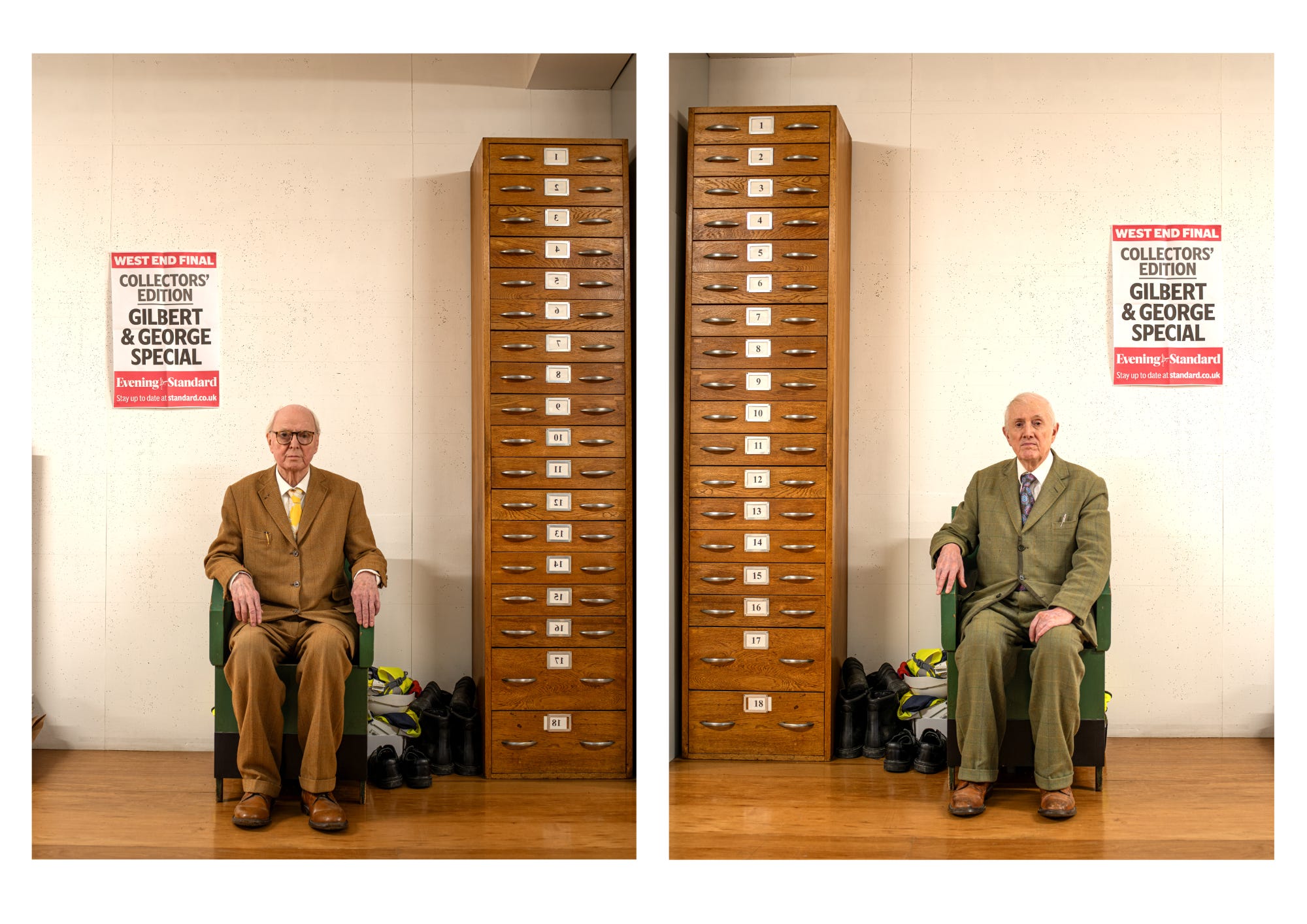
John Updike wrote, “Celebrity is a mask that eats into the face”. When you photograph celebrities, how do you get past the mask?
If I’m encountering the mask, then I go to tap away at it so that the real person emerges. That’s what I’ve often managed to do. It’s about being real and saying this is me. I put forward my own vulnerabilities.
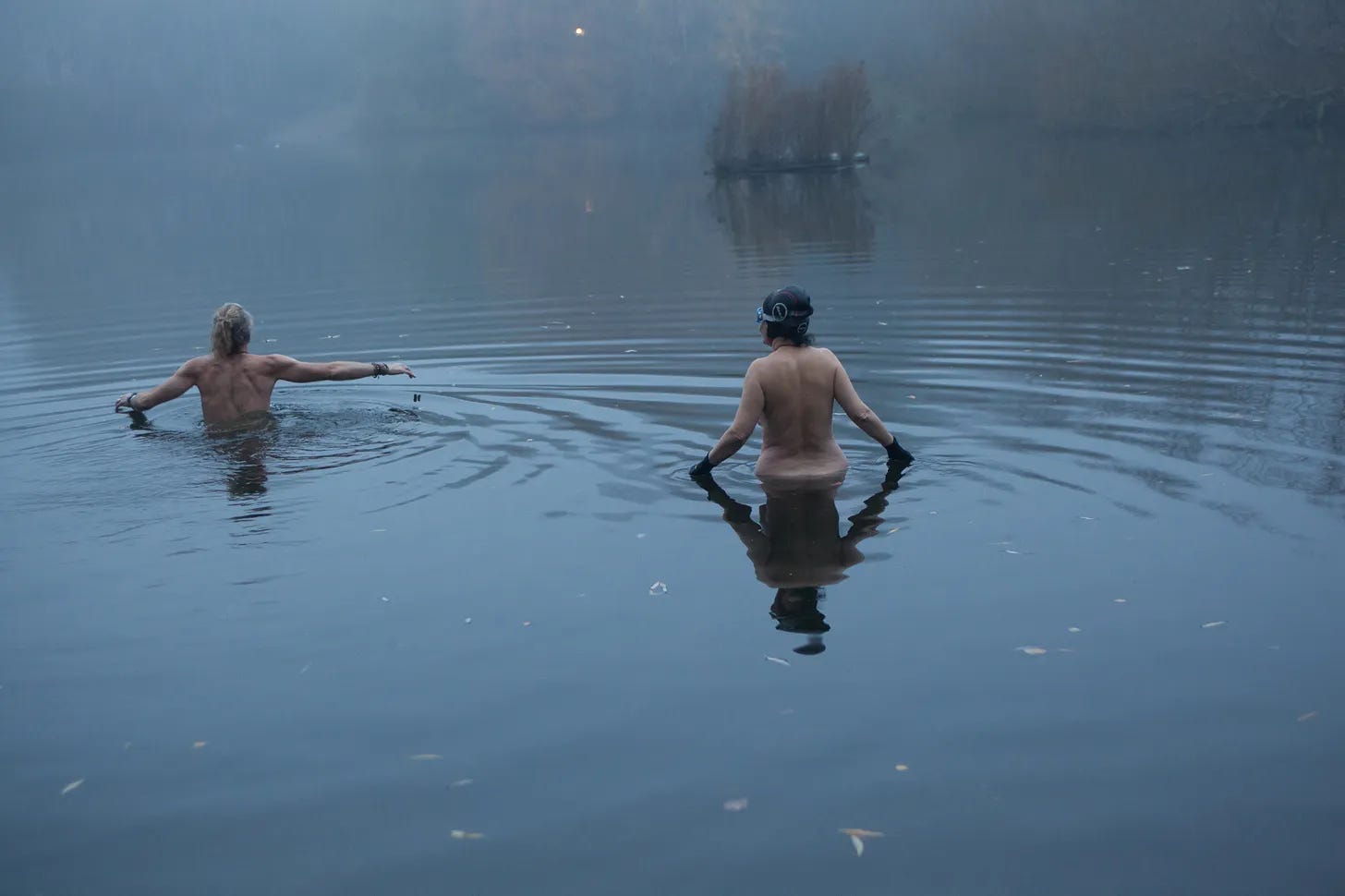
How much do you plan your shoots?
It’s about coming in with an open mind and coming in with my creative frame of reference. When I’m working, one of my goals is not only to surprise myself, but to surprise the viewers. I’m so fearful of boring people.
How about the idea of trying to get approval from the sitter or, indeed, the audience?
I think that’s a mistake. If you do want to get the approval, then you are probably not taking the risks you should take.
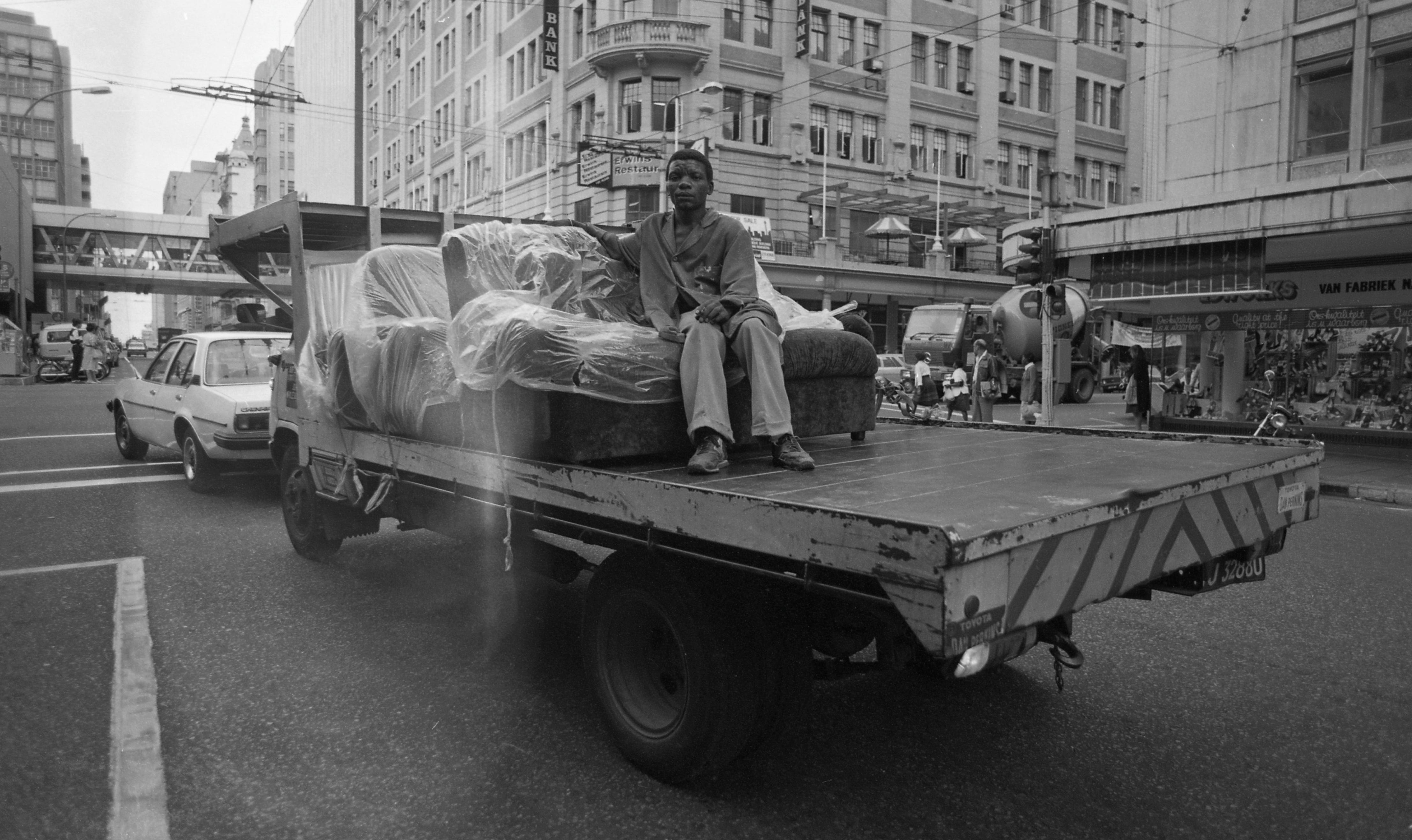
You trained to be a social worker. Did that help your photography?
In the four-year degree, there was psychology, social work, social anthropology, and sociology. It helped as a grounding for sure. I only did two social work jobs. One was for the National Institute for Crime Prevention and the Rehabilitation of Offenders, where I was going into prisons where people were about to be released or going into their homes after they’d been released. I had just discovered photography, and I would go in and sometimes say, “How do you feel about me taking your portrait?”
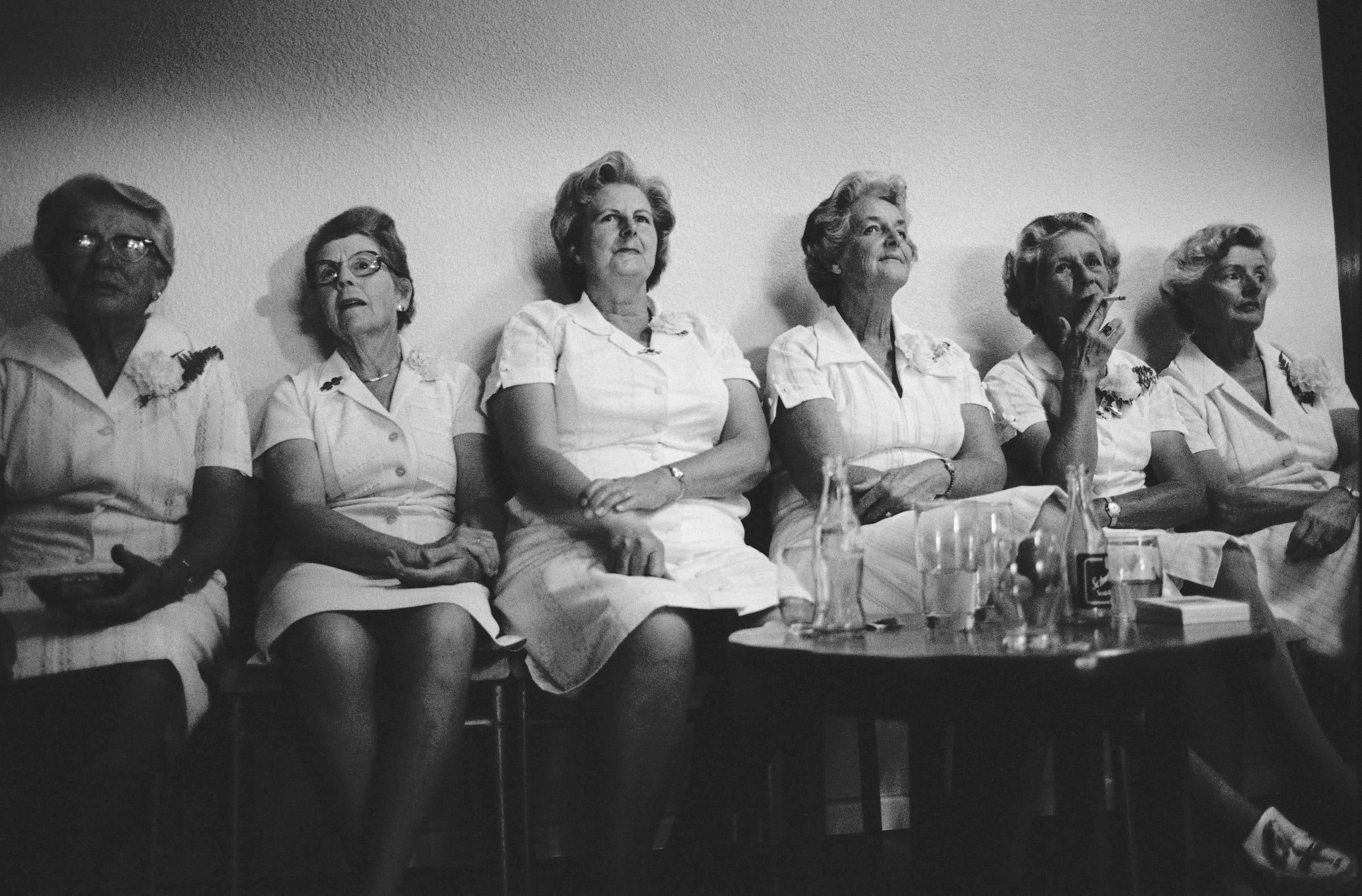
And now forty or so years on from then, what is your sense of purpose? What drives you to keep putting yourself out there?
I’m still hungry. The ideas are still there. At the moment there are a number of ideas that have not yet been birthed: the Affinities book and a film about Norman Wexler. I want them to happen sooner rather than later, so I can move on to the next idea.
Among People is at Stills in Edinburgh from 31 July to 24 October 2026. It is part of Edinburgh Art Festival.
Great interview! I loved your questions. Did you get that sense of Aura from her, too, I wonder… ?
This us a great interview, Neil!